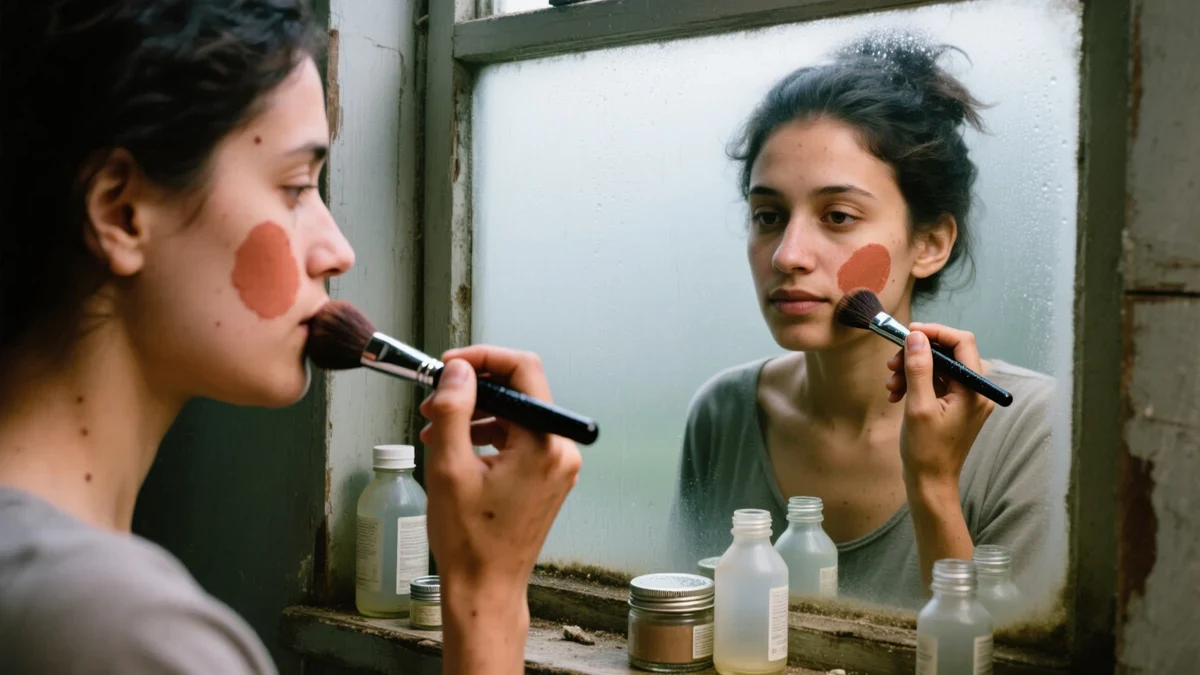
Choosing base makeup by skin type means ignoring most of the front label: a systematic review by Johns Hopkins dermatologists in the Journal of Dermatological Treatment found that non-comedogenic, hypoallergenic, oil-free, and fragrance-free are marketing terms not regulated by any governing…
Removing makeup gently matters more than removing it aggressively: a clinical trial in the Journal of Cosmetic Dermatology found that when 35 women switched to a cleansing oil that needed less rubbing, dryness, scaling, and itchiness decreased within four weeks. The study, run by Kao Corporation…
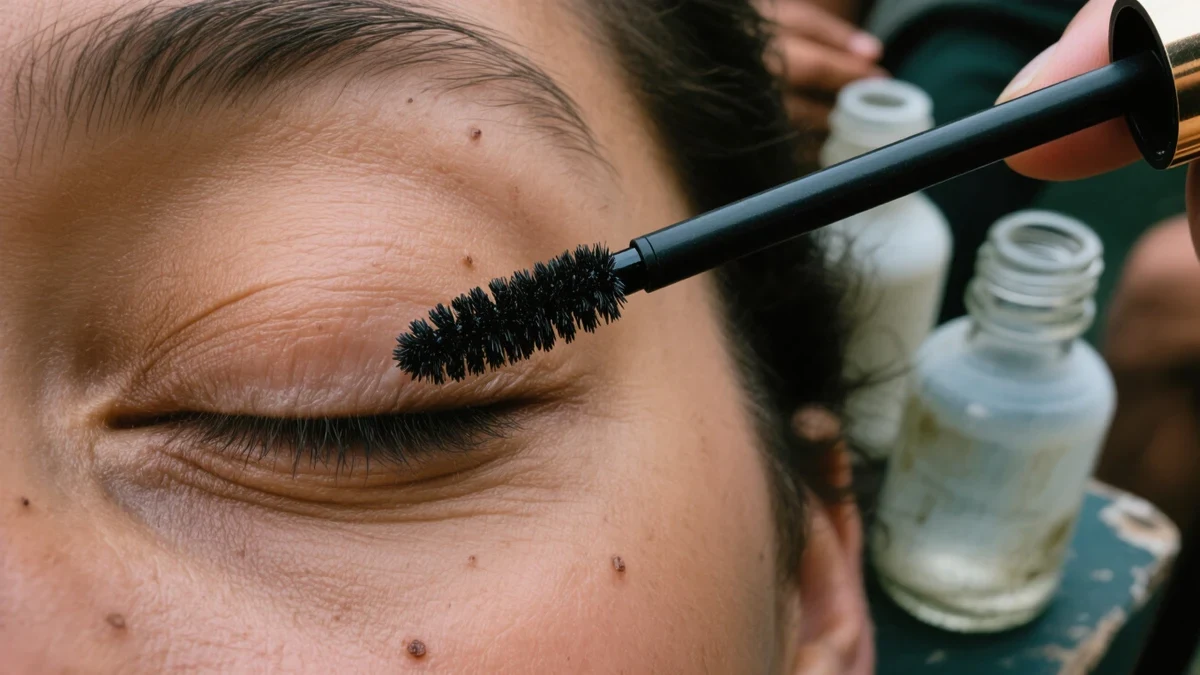
Brush hygiene outranks brush technique: the American Academy of Dermatology lists sharing brushes among habits that worsen acne, because bacteria, oil and dead skin cells transfer between users. A study in Acta Parasitologica found Demodex mites stayed viable in mascara for roughly 21 hours,…
Long-wear makeup stays put through film-forming polymers that dry into a flexible layer over pigment, waxes and emollients tuned for adhesion, and, in the newest mascaras, shape-memory polymers that set around a lash. A Skin Research and Technology study by Oriflame researchers used…
Foundation matches when two separate variables line up: depth, meaning how light or dark skin is, and undertone, the subtle red or yellow hue beneath it. A Dermatologic Surgery paper by dermatologists W. Coleman, Kavita Mariwalla, and Pearl Grimes proposed subdividing the most common skin-color…
Long-wear makeup works through three ingredient classes: film-formers that set into a flexible layer, pigments that sit inside it, and waxes and polymers that control how the film bends instead of cracking. Writing in the Journal of Cosmetic Science, researchers at Manhattan College classify…