Brush hygiene outranks brush technique: the American Academy of Dermatology lists sharing brushes among habits that worsen acne, because bacteria, oil and dead skin cells transfer between users. A study in Acta Parasitologica found Demodex mites stayed viable in mascara for roughly 21 hours, making shared cosmetics a documented transmission route.
What lives on a used brush?
More than powder. The Acta Parasitologica study, published in 2021, placed live Demodex folliculorum mites in powder cream, mascara and lipstick samples and observed them under a microscope. Survival times varied by product: mites immersed in lipstick substrate remained viable for up to 148 hours at partial immersion, and the average survival time in mascara was 21 hours. The authors concluded that makeup cosmetics used by different individuals at short intervals, from several hours to several days, can be a source of mite transmission.
A separate review in Infection and Drug Resistance, also from 2021, widened the lens to salons, noting that many studies have isolated pathogenic bacteria and fungi from beauty salon products and tools, and calling for higher standards in sterilizing and storing them. A home brush used across a household carries a smaller but similar risk profile: the tools concentrate skin oils, dead cells and microbes, and damp bristles stored in a closed case give them a friendly environment.
What does the AAD advise about brushes?
The Academy's acne guidance is direct: do not share makeup, makeup brushes or applicators, a rule that sits on its public habits page. Its reasoning, per the page, is that even with non-comedogenic products, the acne-causing bacteria, oil and dead skin cells on other people's skin can wind up in shared makeup and then transfer to the next user's skin, clogging pores. The same guidance notes that acne itself is not contagious; it is the transfer of pore-clogging material and bacteria that creates the problem.
Dates matter here less than mechanism: the 2021 studies predate current brush design trends, but nothing about antimicrobial brush coatings or new fiber shapes appears in the dermatological literature cited, so the sharing and hygiene findings remain the operative guidance.
The AAD's related habits guidance also covers what sits on brushes before they reach the face: sleeping in makeup, over-washing the face during the day and constantly switching products all appear on its list of habits that can worsen acne. A brush is part of that system, since whatever it carries gets massaged into pores during blending and buffing.
Does technique change the finish?
Technique changes distribution, not chemistry. Two motions dominate evidence-adjacent makeup practice: stippling, pressing or bouncing the brush so product deposits on the surface, and buffing, sweeping in small circles so product sheers out and blends. Dermatological guidance does not rank motions, but it does imply a rule: the longer a brush is worked over congested or acne-prone skin, the more whatever is on the bristles is driven into follicles, which is why clean tools come before perfect motions.
| Brush habit | What the evidence says | Source |
|---|---|---|
| Sharing brushes or makeup | Transfers bacteria, oil and dead skin cells; listed as an acne-worsening habit | AAD |
| Sharing mascara or lipstick | Demodex mites viable for hours to days in product | Acta Parasitologica, 2021 |
| Salon-shared tools | Pathogenic bacteria and fungi isolated from salon tools in multiple studies | Infection and Drug Resistance, 2021 |
How should brushes be cared for?
A hygiene-first routine follows from the research:
- Keep brushes personal; treat sharing with people outside the household as off-limits, per AAD guidance.
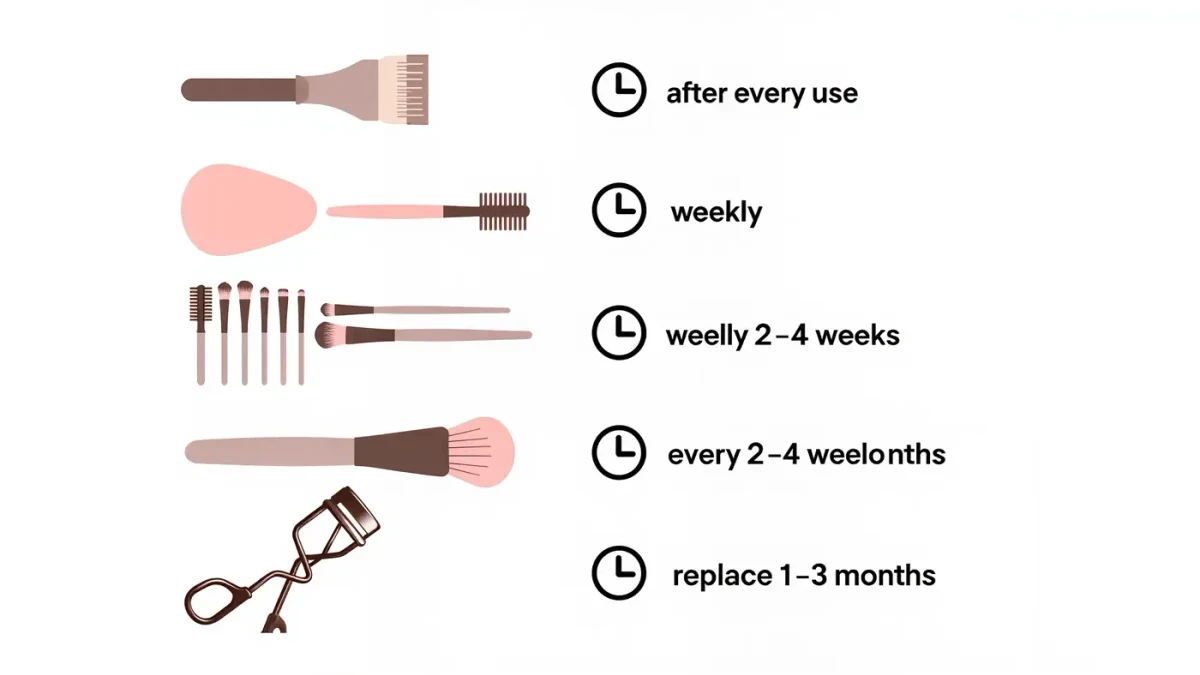
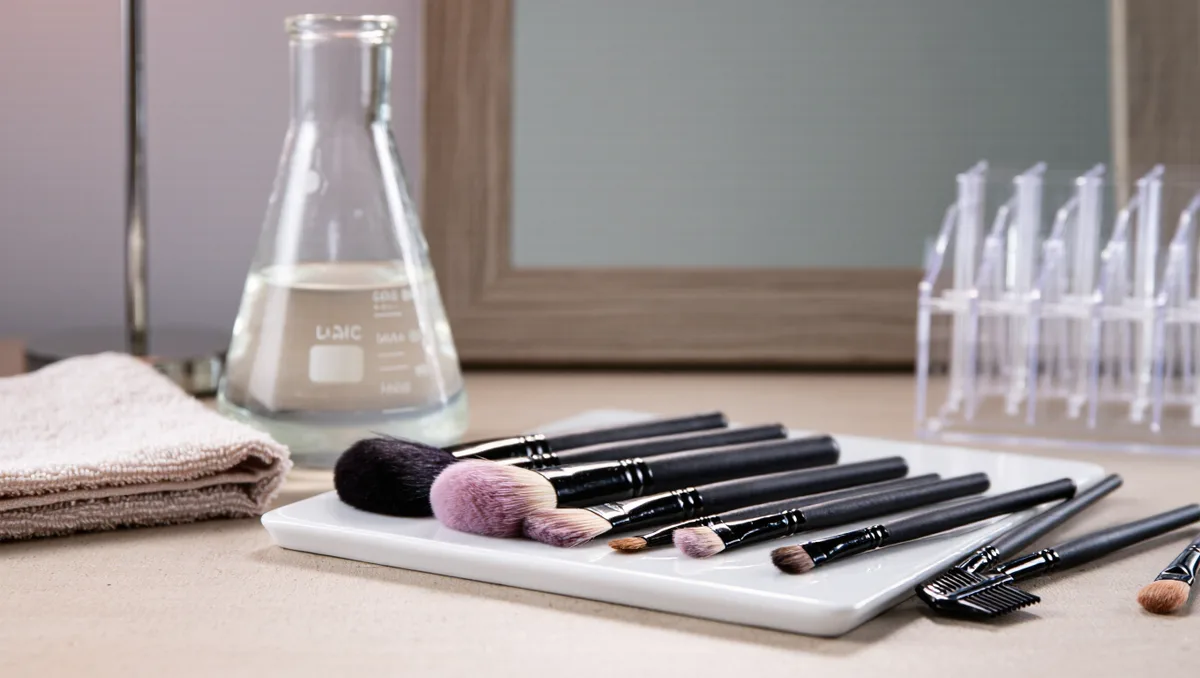
- Wash brushes regularly with a mild cleanser and let them dry fully open to air, since damp bristles in closed storage favor microbial growth.
- Store brushes where bristles stay uncovered and unstained against product residue.
- Retire brushes that stay stained, shed or lose shape, since damaged bristles hold more residue and buffet the skin harder.
- Clean new brushes before first use; manufacturing residue is not a hygiene baseline.
Brush type changes the upkeep more than the risk. Dense foundation and concealer brushes load liquid product that dries into the ferrule and feeds on skin oils, which is why they need the most frequent washing; powder brushes stay drier and accumulate more slowly. Natural-hair bristles hold more product and generally want gentler cleanser than synthetic fibers, a material constraint rather than a hygiene verdict. None of these distinctions appears in the transmission studies, but they follow from what the studies do show about where residue and moisture collect.
What the evidence does not show is any specific wash frequency mandated by research; the studies document what accumulates and transmits, while dermatological bodies translate that into don't-share guidance. Anyone experiencing persistent breakouts, eye irritation or unexplained skin reactions around product use should treat that as a reason to see a dermatologist rather than to re-shop brushes.
This article is for informational purposes only and is not medical advice. For persistent breakouts or skin irritation, consult a dermatologist or qualified healthcare professional.