Setting powder and setting spray do two different jobs: powder absorbs oil so creams stop sliding, while spray seals the finished face. Per L'Oréal Paris's explainer, setting powders have a dry, finely milled texture that helps absorb excess oil and reduce shine, while a spray's fine mist keeps makeup from creasing, smudging, or transferring. Skin type picks between them.
What does setting spray actually do?
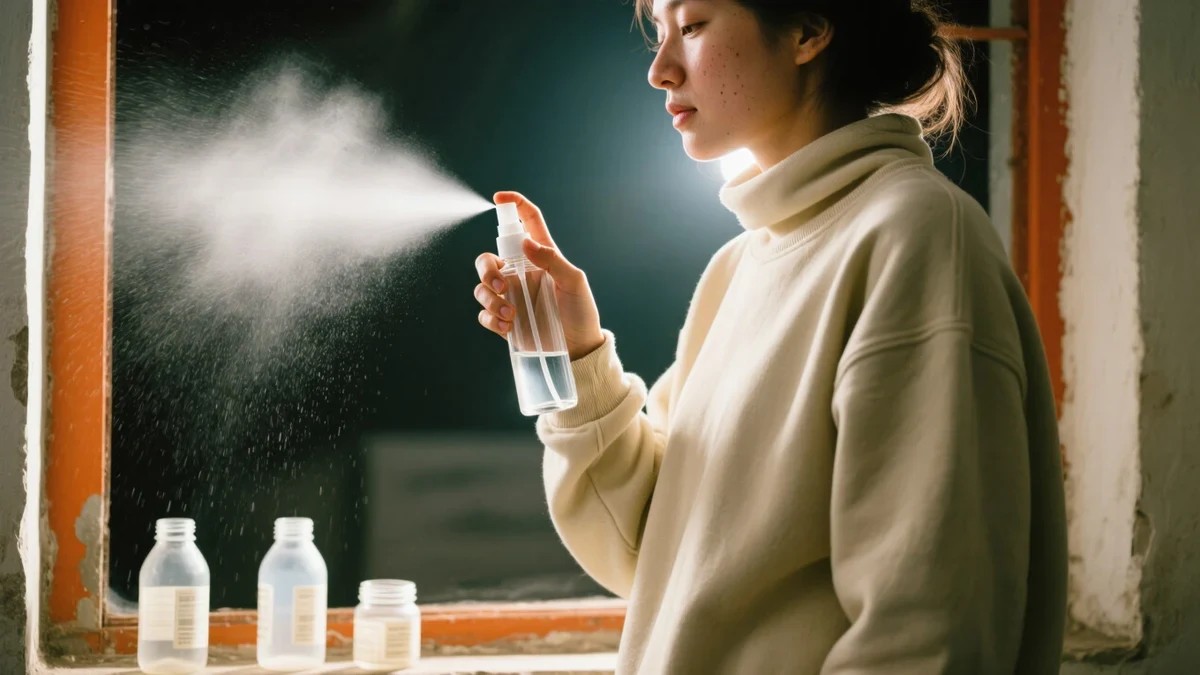
A setting spray is the final step, misted over completed makeup. Its job is bonding rather than coverage: the liquid film dries down and knits powder and cream layers together so they wear as one surface. L'Oréal Paris describes the mechanism from the brand's formulation perspective, noting that the fine mist helps seal makeup and keep it from creasing, smudging, or transferring, and that even a heavy-handed application will not dull the finish, only take longer to dry. That forgiving quality is why sprays suit nearly all skin types in the brand's guidance.
What sprays do not do is control oil on their own. A mist contains no absorbent material, so on very oily skin the seal can sit on top of shine rather than manage it. Brands formulate around this by advertising oil-control variants, but per the brand's own explainer the fundamental division of labor remains: sprays unify and protect a finished look, powders manage shine where it starts. Readers with dry skin get the most from a hydrating spray precisely because it adds no absorbent load.
What does setting powder actually do?
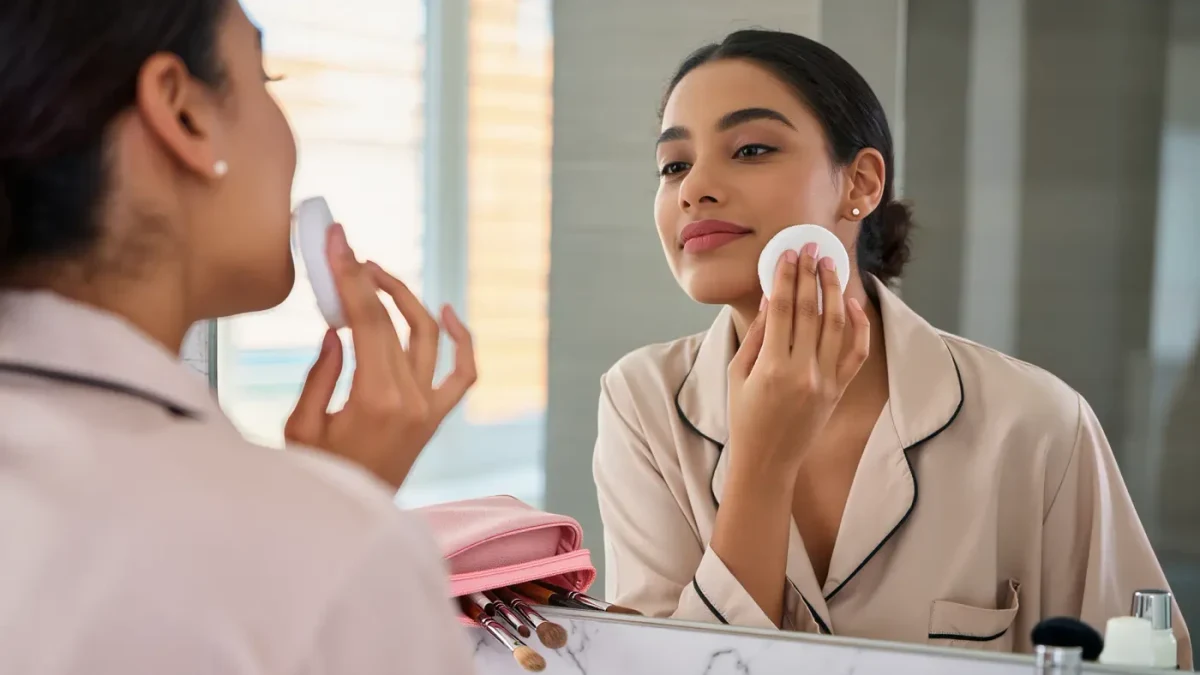
Setting powder works mid-routine, applied over foundation and concealer to lock creams in place. Its function is absorption: finely milled particles soak up the sebum that would otherwise break down cream pigments within hours. Per L'Oréal Paris, powders suit oily or combination skin because they help absorb excess oil and keep shine under control, making them the sturdier choice for the T-zone. Loose powders are the classic form for baking under the eyes, pressed powders for portable touch-ups.
Powder does have a technique ceiling. Applied too heavily, it reads as texture, settling into fine lines and emphasizing dry patches, which is why makeup guidance generally keeps it targeted rather than all-over. Application style matters for another reason worth knowing: a peer-reviewed exposure study in the Journal of Nanoparticle Research measured particles from 14 nanometers to 20 micrometers released while applying cosmetic powders and found the highest inhaled particle mass in the coarse fraction, with 85 to 93 percent of aerosol deposition occurring in the head airways. The practical takeaway for readers is to apply loose powder without creating a visible cloud, and to keep the face out of the direct line of the puff's flick.
Which one should a reader use?
Choose by skin type and by what the day demands. The comparison below follows the functions both sources describe.
| Feature | Setting powder | Setting spray |
|---|---|---|
| Main function | Absorbs oil, sets cream products | Seals and unifies finished makeup |
| When in routine | Mid-application, over base | Final step |
| Best for | Oily and combination skin, T-zone | Nearly all skin types, per brand guidance |
| Chief risk | Emphasizing texture if over-applied | Longer dry time if over-applied |
| Finish | Matte, softened shine | Keeps the existing finish intact |
For long days on oily skin, the two stack rather than compete. A common sequencing, consistent with the brand's usage guidance: set concealer and the T-zone with powder first, finish with a mist to remove powderiness and bond the layers. Readers with dry skin can skip powder in most cases and let a spray do the sealing, which is the cheaper and less drying route. Read the L'Oréal Paris comparison for the brand's own skin-type pairings, and the powder particle study in the Journal of Nanoparticle Research for the application-mist analysis.
How should each one be applied?
Placement differs as much as product does. Powder belongs where cream meets oil, under the eyes to lock concealer, across the T-zone where shine starts, and anywhere foundation pools by midday. The brand's guidance frames powders as targeted oil control rather than an all-over veil, and the physics agrees: absorption happens only where particles sit, and sitting elsewhere only adds texture. A pressed powder pressed with a puff gives heavier set than a loose powder swept with a soft brush, so the tool choice is part of the dosage.
Spray is simpler but not mindless. Held at the distance the label suggests, one or two passes over a finished face is the standard usage pattern, and the L'Oréal Paris explainer notes the main risk of over-application is simply longer drying time, not a ruined finish. The mist is designed to land as droplets that dry into a film, so spraying until the face is wet defeats the mechanism and can reactivate powder or cream pigments underneath. Readers combining both, powder first on the oily zones, spray last over everything, get the absorption and the seal working in their respective layers.
What about the powder cloud question?
The particle research deserves its own reading, because loose powder is one of the few makeup steps with an inhalation literature. The Rutgers team applied three nanotechnology-based and three regular cosmetic powders to a mannequin's face under realistic use conditions while measuring the size and concentration of inhaled particles. Beyond the finding that most deposited mass was coarse and most deposition occurred in the head airways, the study's electron microscopy suggested nanomaterials were likely distributed as agglomerates across the entire investigated size range.
For a reader, three habits follow from that data. Apply loose powder with the face slightly turned or the puff lowered, so the falling cloud is not inhaled directly. Avoid the flick-and-poof application that maximizes airborne particles for theatrical effect. And skip loose powder entirely in favor of pressed formats in situations, small bathrooms, travel, shared spaces, where ventilation is poor. The study measured exposure, not health outcomes, so the honest framing is exposure reduction rather than alarm.
What does no setting product do?
Neither powder nor spray improves skin, and wear-time claims on packaging are marketing statements, not laboratory guarantees. The evidence base for setting products is formulation logic plus brand testing rather than peer-reviewed clinical literature, so treat any 16-hour claim as the brand's own account of its formula. A setting step extends how makeup looks across a day, within the limits of the skin underneath it, which is why prep, hydration, and sun protection still do more for how a face wears by evening than the last ten seconds of mist do.
This article is for informational purposes only and does not constitute medical advice. Skincare and haircare needs vary by individual; consult a dermatologist or qualified healthcare professional before starting any new treatment, especially for persistent skin, scalp, or hair concerns.