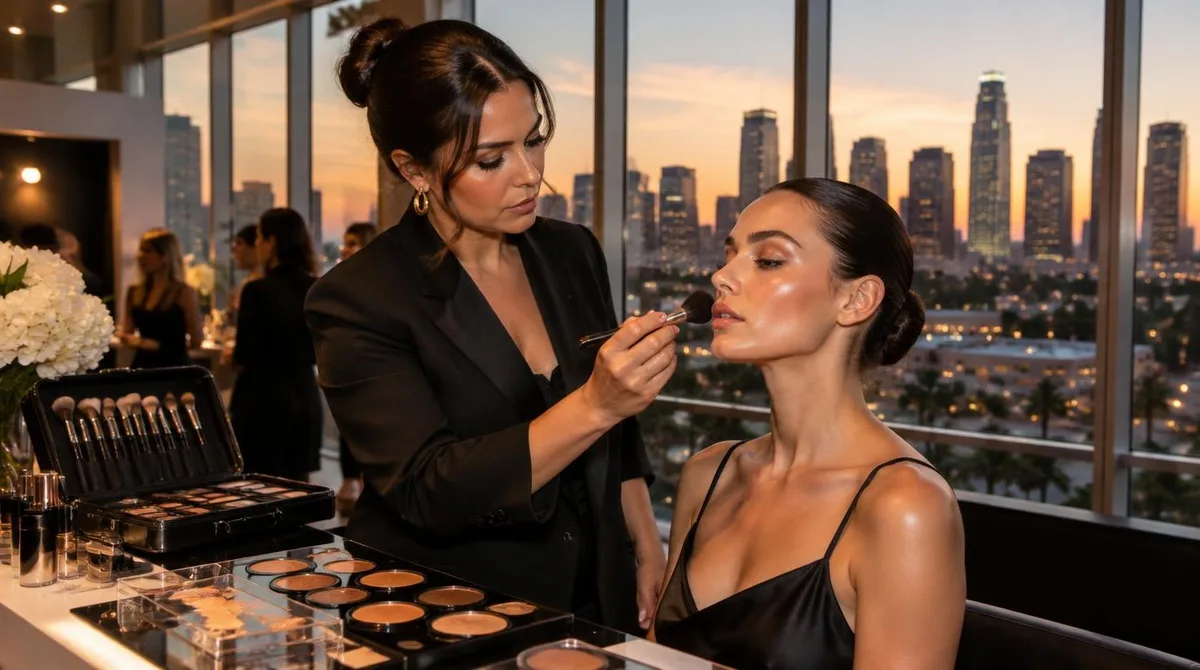
The Makeup Show returns to Los Angeles November 6–8, 2026, with The Creative Experience LA at the California Market Center. According to Vocal, the three-day event gathers 25 professional beauty brands, including Danessa Myricks Beauty, Jones Road, Rokael Beauty, Dream Labs, and Depot Chopra. The through-line: most of these companies were built by working makeup artists, not marketing departments.
That detail matters for anyone who buys makeup, not just anyone who applies it for a living. Artists spend years in the chair noticing what a kit is missing — a texture that layers, a lash that stays put, a system that keeps a bag organized. When those people launch brands, the products tend to solve problems the counter never noticed. More on the makeup side of that below.
What is The Creative Experience LA, exactly?
It is a three-day trade-style show running November 6–8, 2026, at the California Market Center in Los Angeles. Attendees can explore products, learn techniques, and meet the founders behind the brands, per the event coverage. Tickets and details are listed at themakeupshow.com.
The show is part of a wider calendar. The same source lists The Makeup Shop NYC on December 12–13, iARTIST 9.0 on May 1, 2027, and The Makeup Show NYC on May 2–3, 2027. For a publication that tracks the beauty calendar, this sits firmly in beauty news territory: a professional event with clear spillover for everyday shoppers.
Why artist-founded brands keep winning shelf space
The coverage frames it plainly: many beauty innovations begin behind the scenes, with artists who know what works and what is missing from a professional kit. Building a brand, in that framing, is an extension of the job rather than a pivot away from it. The Los Angeles lineup puts that thesis on display with five distinct founding stories.
- Danessa Myricks Beauty — Myricks is described as a self-taught makeup artist whose love of experimentation shaped the brand, which is known for inclusive, multifunctional products.
- Jones Road — Bobbi Brown, after decades in the industry, built the brand around simplified beauty: clean, high-performance formulas designed to be easy to use and versatile enough for a pro kit.
- Rokael Beauty — Celebrity artist Rokael Lizama started with custom lash designs created for clients such as Beyoncé and Ariana Grande, then built a brand that brings red-carpet precision to a wider audience.
- Dream Labs — Artist Alexx Mayo, whose background includes global tours, music videos, and red carpets, developed Eternal Priming Water with the brand, his first product, built around long-wear makeup performance.
- Depot Chopra — Grishan Chopra created a line of professional kit-organization solutions, an argument that tools and systems matter as much as the products themselves.
What this means for a reader's makeup bag
Two takeaways are worth pulling out. First, the professional-to-consumer pipeline is now explicit. A lash style engineered for a stadium stage or a primer tested on tour becomes a retail product, and the show format lets buyers ask the founder directly what problem it solves. Second, the range of what counts as innovation has widened. The coverage notes that innovation is not always another foundation or eyeshadow palette — sometimes it is a depotting system that makes a kit faster to work from. Readers following this should also see How Cleansers Actually Work, According to Dermatological Research.
For shoppers, the practical move is the one this publication always recommends: read the ingredient list and the use case before the story. A founder's résumé explains why a product exists. It does not, by itself, prove how a formula performs on a given skin tone or skin type — that is what testing and evidence are for, and the show floor is where those questions get asked first. We covered a connected angle in What Antioxidant Serums Actually Do for Skin, According to Research.
The analysis: why the pro-show model endures
The Makeup Show's model has outlasted plenty of retail-driven beauty events because it sells access rather than hype. The brands on this floor are chosen for professional relevance, and the audience — working artists plus serious enthusiasts — asks harder questions than a launch party crowd does. That dynamic is useful for the wider market: products get pressure-tested by people who will actually use them on clients, and the ones that survive tend to reach the counter with their claims already earned.
It also signals where the category is heading. A lineup heavy on artist-founders, multifunctional formulas, and kit-organization tools suggests the professional community still leads on formulation and workflow, with the consumer market following. Anyone watching what will fill makeup bags next season could do worse than watch what 25 pro-driven brands put on a table in Los Angeles this November.