A moisturizer is a topical formulation that hydrates and protects the stratum corneum, typically combining humectants that draw water into the outer layer with emollients and occlusive lipids that smooth and seal it. Per barrier researcher Marie Lodén's review in the American Journal of Clinical Dermatology, the term overlaps with emollient — but moisturizers characteristically add humectants.
What are the three functional ingredient classes?
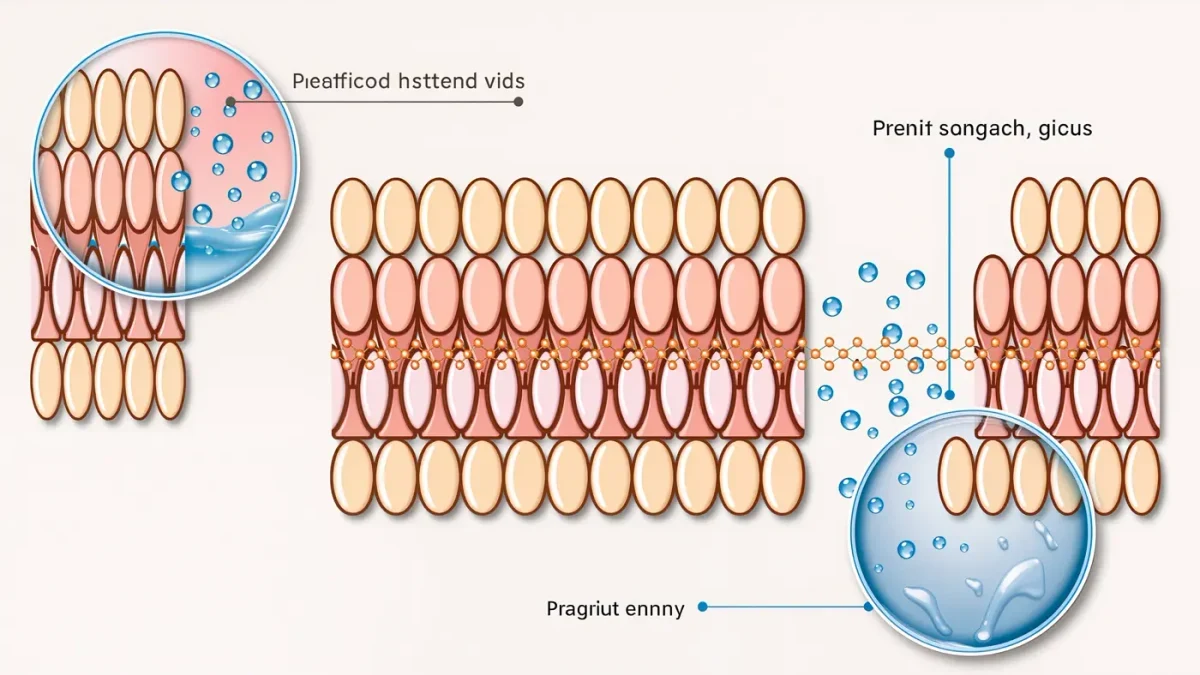
The classic division is functional, not marketing. Humectants — glycerin and urea are the best-studied — attract and hold water in the stratum corneum. Emollients fill the spaces between roughened corneocytes so skin feels smooth. Occlusives, with petrolatum the reference example, form a layer that physically reduces water loss from the surface.
Lodén's review documents why the classes overlap in practice. Petrolatum, an occlusive, showed an immediate barrier-repairing effect in delipidized stratum corneum in the studies cited. Urea, a humectant, reduced transepidermal water loss in atopic and ichthyotic patients in double-blind studies and made normal and atopic skin less susceptible to irritation from sodium lauryl sulfate.
That last point is quietly significant: a well-chosen moisturizer does not just feel hydrating, it measurably raises the skin's resistance to a standard irritant. Few single ingredients anywhere in skincare have that on paper.
| Class | Examples | Documented action (per Lodén, Am J Clin Dermatol) |
|---|---|---|
| Humectant | Glycerin, urea | Hydrates stratum corneum; urea reduced TEWL and SLS irritation susceptibility |
| Emollient | Lipid-rich smoothing agents | Breaks the dry skin cycle, maintains smoothness |
| Occlusive | Petrolatum | Immediate barrier repair in delipidized stratum corneum |
Does formulation chemistry matter as much as star ingredients?
Yes — and sometimes against the product. The same review notes that some formulations may actually deteriorate the skin condition, whereas others improve clinical appearance and barrier function. Emulsifiers, the ingredients that keep oil and water mixed, may weaken the barrier, per Lodén's review in the American Journal of Clinical Dermatology.
Excipients, conventionally treated as inert fillers, can also have more pronounced effects in skin than previously considered, the review states. Once applied, ingredients stay on the surface, absorb in, metabolize, or evaporate and slough away — so what a formula does depends on the whole assembly, not the highlight on the front of the jar.
Dryness itself is not one condition: the review distinguishes dry-skin barrier disorders such as atopic skin, psoriasis, ichthyosis and contact dermatitis, each with different chemistry and morphology in the epidermis. That is why the same cream can rescue one reader's shins and do nothing for another's cheeks — the target differs, and so should the formulation.
What is the evidence on ceramides and barrier lipids?
Ceramides earn their reputation from barrier composition itself: the stratum corneum's lipids are organized in lamellar sheets whose packing determines how much water escapes. One ceramide-dominant lipid mixture improved atopic dermatitis and decreased transepidermal water loss in an open-label study in children cited in the review.
The lesson is not that ceramines are singular — the lesson is that matching lipid chemistry to the barrier's own architecture is what the evidence rewards. A ceramide listed seventh in a mostly water-light gel behaves differently from the same lipid in a lipid-dominant cream base, per the review's point that dosage and formulation govern efficacy.
Urea deserves its own note: in double-blind studies, urea moisturizers reduced water loss in atopic and ichthyotic patients, and urea-treated skin resisted a standard irritant better than untreated skin. Concentration matters — the review links sensory reactions such as stinging to low pH and to ingredients like lactic acid and urea — so potency and tolerance trade off along one line.
Glycerin sits at the tolerant end of that line, which is why it anchors so many formulas: it hydrates without the sensory penalty, and its decades of use give formulators well-mapped texture behavior across everything from gels to hand creams.
Are moisturizers really inert for the skin?
Not according to Lodén's later work. Moisturizers affect stratum corneum architecture and barrier homeostasis, she writes — topically applied ingredients "are not as inert to the skin as one might expect."
That chapter, Treatments Improving Skin Barrier Function in Current Problems in Dermatology, lays out several mechanisms: simple deposition of lipid material outside the skin; changes to the lamellar organization and packing of the lipid matrix, altering permeability; penetration that interferes with barrier lipid production and corneocyte maturation; and influences on desquamatory proteases that can alter stratum corneum thickness.
In other words, a daily moisturizer is a physiologically active intervention with a dose-response. The American Journal of Clinical Dermatology review adds that efficacy likely depends on dosage, and that compliance — stinging from urea or lactic acid, greasiness, strong odor — is the main obstacle in real-world use. Barrier-improving moisturizers may even delay relapse of dermatitis in dry-skin conditions, a possibility the wider literature raises.
How do you choose by need rather than by claim?
The research points to a short decision path. For very dry or barrier-compromised skin, favor richer formulas where occlusives and documented humectants appear high in the list. For sensitive or reactive skin, sensory tolerance is clinical: a cream that stings will not be used, and, per Lodén, a cream that is not used cannot work.
- Read the first five ingredients looking for one humectant (glycerin, urea) and one occlusive or emollient.
- For eczema-prone skin, weigh ceramide-containing formulas against the pediatric evidence cited in the review.
- Accept texture as a legitimate criterion — compliance is documented as the limiting factor.
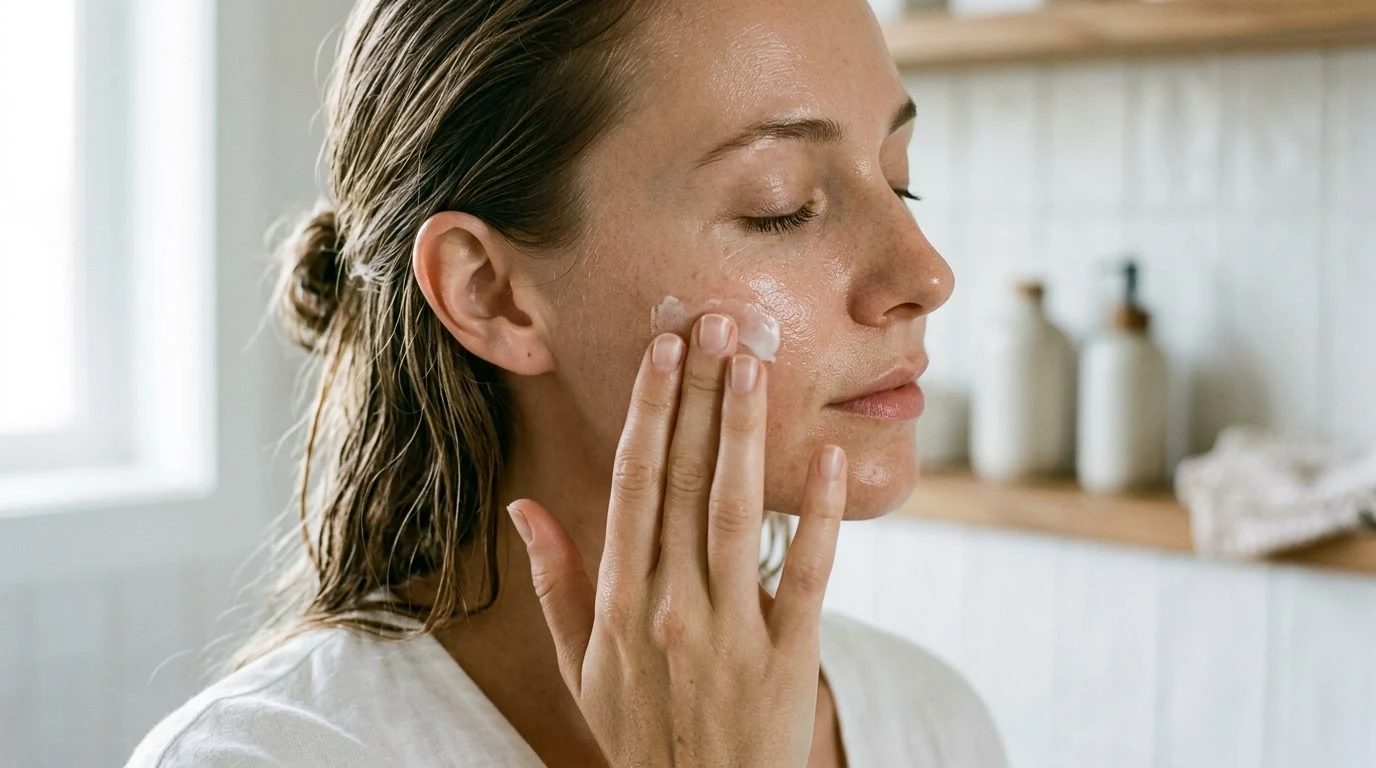
- Apply to slightly damp skin, humectant first and occlusive last, so each class does its documented job.
- Treat marketing terms like "hypoallergenic" as labeling, not certification; the ingredient list is the verifiable document.
What the evidence does not show
No moisturizer is documented to reverse aging or permanently restructure the barrier; measured outcomes are hydration, water loss, irritation susceptibility and condition appearance. And "more expensive" is not a documented variable in any of this literature. The barrier responds to chemistry and consistency — which is good news, because both are things a reader can check on the back of any jar, at any price.
Application order also follows from the classes, not from convention: on damp skin, water-attracting humectants have water to hold, and an occlusive applied last seals the assembly in. That single sequencing fact explains most of the "apply to slightly damp skin" advice printed on jars — and why it is correct. Humid-air bathrooms and post-shower timing are simply that principle made habit — and a repeatable one at that.
This article is for informational purposes only and does not constitute medical advice. For eczema, persistent dryness or barrier impairment, consult a dermatologist or qualified healthcare professional.