An acne routine works when actives cover all acne-prone skin, not just visible blemishes, and when each product gets six to eight weeks before judgment. That is the American Academy of Dermatology's guidance, which places complete clearing at three to four months, and a 2025 Journal of Drugs in Dermatology analysis adds tolerability data for combination topicals.
What does the AAD actually advise?
The American Academy of Dermatology's public guidance on habits that worsen acne is unusually specific. It advises against trying a new acne treatment every week or so, because that approach can irritate skin and cause breakouts, and recommends using a product for 6 to 8 weeks before switching. It also instructs patients to spread a thin layer of acne medication evenly over acne-prone areas rather than dabbing it only on blemishes, because spot-treating what is visible fails to prevent new breakouts.
Notably, the guidance is behavioral before it is pharmaceutical: the habits page is where the Academy tells patients what routine structure does, while the treatment pages assume a dermatologist has already tailored the actives. That ordering matters for readers who meet acne advice product-first on social platforms.
The same AAD page addresses product selection and sharing, and its causes hub adds the physical triggers. It recommends using only makeup, sunscreen, skin and hair-care products labeled non-comedogenic or won't clog pores, while noting these products don't cause breakouts in most people, and it warns against sharing makeup, brushes or applicators because acne-causing bacteria, oil and dead skin cells can transfer between users. Sleeping in makeup is listed as a habit to stop, and washing the face several times a day is flagged as irritation risk rather than hygiene benefit.
What do the treatment studies show?
Combination topical therapy has accumulated real tolerability data. A pooled analysis published in the Journal of Drugs in Dermatology in August 2025 examined clindamycin phosphate 1.2%/adapalene 0.15%/benzoyl peroxide 3.1% gel, described by its authors as the only fixed-dose, triple-combination topical for acne, across one phase 2 and two phase 3 double-blind 12-week studies. In the truncal analysis of 219 participants, treatment-emergent adverse event rates on the trunk were 5.9 percent with the combination versus 1.0 percent with vehicle, most events were mild, none were serious, and mean cutaneous safety scores stayed below 0.5, where 1 equals mild.
The analysis is manufacturer-pooled post hoc work, which is a caveat worth holding. But its headline, that a retinoid-antibiotic-benzoyl peroxide combination is tolerable over 12 weeks in participants aged 9 and up, aligns with the AAD's broader position that dermatologists tailor combination treatment plans to clear acne, stop new breakouts and prevent scarring.
What everyday habits work against clearing?
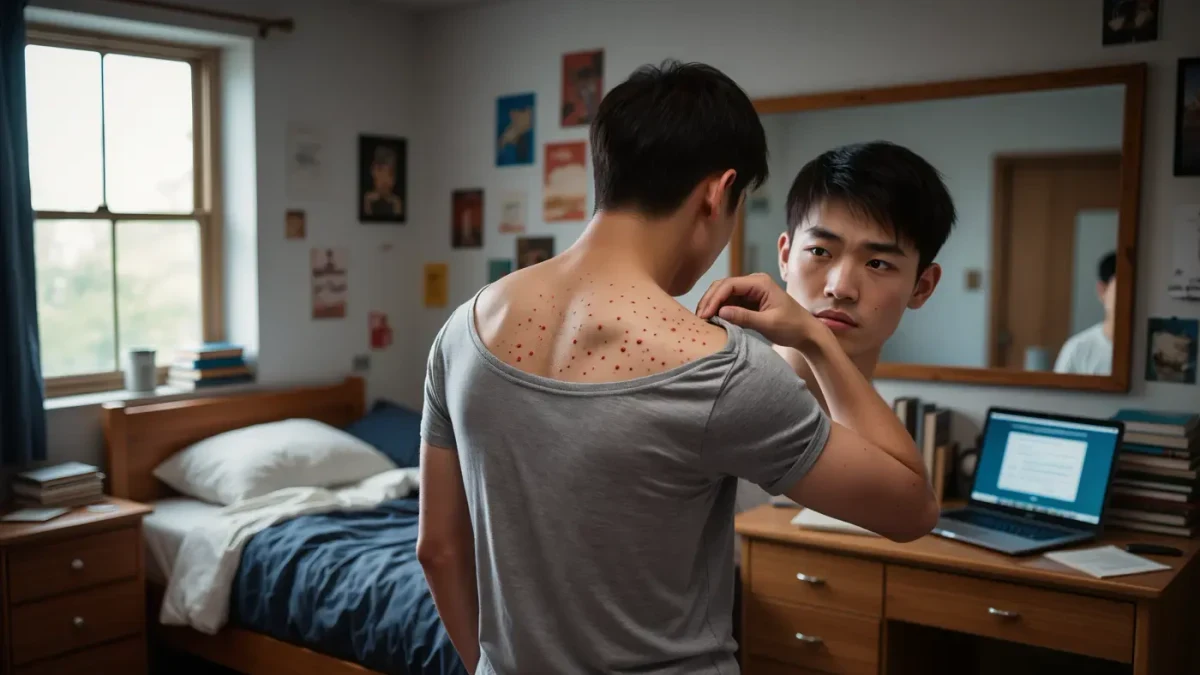
The AAD's causes hub frames the common triggers plainly: sports equipment can cause a type of acne called acne mechanica, workouts can contribute when sweat and friction sit on skin, and hair care products along the hairline can produce bumps that look like acne. Its advice on workouts is that people can exercise and see clearer skin by following the dermatologist-given aftercare it outlines, which centers on not letting sweat sit.
| AAD guidance point | Why it matters |
|---|---|
| Use one treatment for 6–8 weeks before switching | Switching weekly irritates skin; complete clearing takes 3–4 months |
| Apply medication to all acne-prone areas | Spot-treating fails to prevent new blemishes |
| Choose non-comedogenic-labeled products | Labeling indicates formulas that don't cause breakouts in most people; it is a labeling claim, not a guarantee |
| Do not share makeup or applicators | Transfers bacteria, oil and dead skin cells between users |
What order should a basic routine follow?
A minimal, AAD-consistent routine looks like this:
- Wash twice daily with a gentle, non-comedogenic cleanser; more washing irritates rather than helps.
- Apply acne medication in a thin, even layer across every area that breaks out, not only on spots.
- Moisturize; the AAD maintains a dedicated guidance page on moisturizer use in acne-prone skin because drying the skin out is counterproductive.
- Remove makeup fully before sleep, without exceptions, per the AAD's habits page.
- Keep the routine stable for six to eight weeks before judging or changing it.
Two refinements follow from the same guidance. First, patience has a number attached: the AAD places visible improvement at six to eight weeks and complete clearing at three to four months, so a product abandoned at week two was never actually tested. Second, coverage beats precision, because acne lesions visible today started forming weeks earlier; treating the whole prone area addresses the queue behind the surface, which is the specific failure mode the Academy attributes to spot treatment.
What the evidence does not show is that any cosmetic product, cleansing device or dietary change clears acne on its own. Persistent, painful or scarring acne is a medical condition, and the AAD's guidance exists precisely because dermatologist-led treatment, including prescription combinations like the one studied in 2025, has the data behind it.
This article is for informational purposes only and is not medical advice. Acne is a medical condition; for diagnosis and treatment, consult a dermatologist or qualified healthcare professional.