The core winter skin adjustment is behavioral before cosmetic: shorter, warm-not-hot showers and a heavier moisturizer on damp skin, per American Academy of Dermatology guidance. Dermatologist Elizabeth Kiracofe, MD, FAAD explains that dropping temperature and humidity make skin struggle to retain moisture — and Skin Research and Technology measurements agree.
What Actually Changes in Skin Between Seasons?
The claim "skin gets dry in winter" sounds like folklore until the biophysics shows up. A study of Caucasian women from Central Europe, published in Skin Research and Technology, evaluated the effect of seasons, environmental temperature, and humidity on skin parameters — because factors like UV radiation, ambient temperature, and air humidity oscillate through the year and give rise to seasonal variation in skin properties.
A separate in-vivo study in the Journal of the Mechanical Behavior of Biomedical Materials tracked 14 healthy volunteers across one winter-to-summer transition and reported decreases in trans-epidermal water loss and average epidermal roughness from winter to summer — meaning skin in winter was losing more water and measuring rougher. Indoor heating compounds this by drying room air further, which is why dermatologists suggest a humidifier as a low-cost lever.
None of this says skin "needs" a new routine every 12 weeks. It says the water side of the ledger — humidity, temperature, water loss — moves against the barrier in cold months, and routine adjustments are about compensating for that shift.
What Do Dermatologists Advise for Cold-Weather Skin?
The AAD's cold-weather guidance, attributed to Elizabeth Kiracofe, MD, FAAD, a dermatologist in private practice in Chicago, is specific about protection: keeping hands, feet, and face covered outdoors is essential to preventing dry skin and stopping it from worsening. "We can't hibernate inside all winter," she says, "so when you're out and about, make sure that as little skin as possible is exposed to the elements and you protect your lips by wearing lip balm."
- Limit baths and showers to five to ten minutes in warm — not hot — water, since a short soak in warm water can add moisture while hot water strips it.
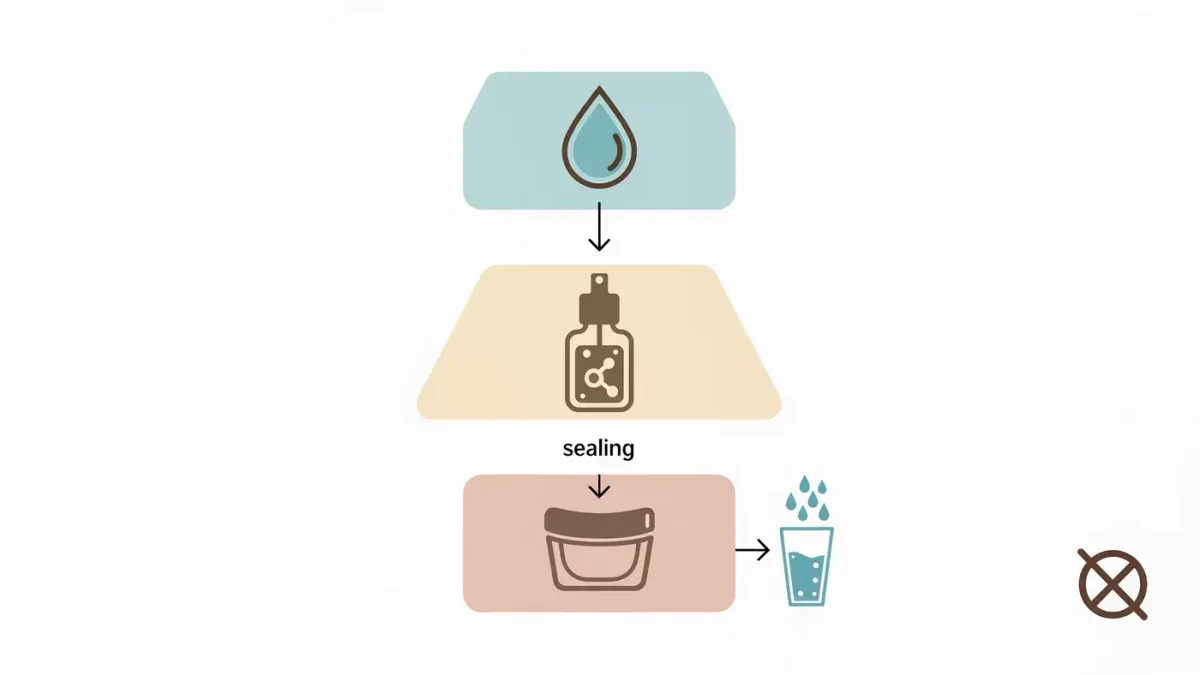
- Apply moisturizer within minutes of bathing, on damp skin, to trap water before it evaporates.
- Switch textures by season: creams and ointments add more moisture and are more effective than lotions, per dermatological guidance.
- Cover exposed skin outdoors — gloves, scarves, lip balm — and consider a humidifier for heated rooms.
- Keep sunscreen in the routine; UV exposure continues in winter, and snow glare adds to it.
Which Texture Changes Are Worth Making in Winter?
The honest hierarchy: texture upgrades carry the evidence, ingredient overhauls mostly do not. The most-supported winter move is lotion-to-cream, because thicker leave-on products reduce water loss. Foaming cleansers that leave skin tight in January can be swapped for gentler, non-stripping formulas, and fragrance becomes a common irritant on newly cracked, sensitive skin.
| Summer routine step | Winter adjustment | Basis |
|---|---|---|
| Long, hot showers | 5-10 minutes, warm water | Dermatological guidance on preventing winter dryness |
| Light lotion | Cream or ointment on damp skin | Occlusive textures reduce measured water loss |
| Foaming gel cleanser | Gentler, low-foam cleanser | Barrier preservation in low humidity |
| SPF worn on beach days | SPF daily, lip balm included | Continued UV exposure in cold months |
| No overnight step | Thicker night occlusive on dry zones | Heated indoor air lowers overnight humidity |
What the evidence does not show is that winter requires an arsenal of new actives — retinoids and exfoliating acids can often continue as tolerated, with irritation managed by pacing, not abandonment. The seasonal signal is about water: less of it in the air, more of it needed in the routine, applied at the moment the skin is still damp.
Which Winter Skin Claims Deserve Skepticism?
Winter also brings its marketing season, and a few recurring claims deserve a colder look than the weather. "Deep hydration" is not a measurable claim — what the studies measure is trans-epidermal water loss, and what reduces it is occlusion, humectants, and emollients in the right texture. A cream cannot be "clinically proven to repair winter skin" unless a named study says so, and brands citing their own consumer panels are reporting preference, not physiology.
"Skin gets used to a cream, so switch often" is folklore; the biophysics gives no mechanism for tolerance to petrolatum, glycerin, or ceramide-type ingredients. What does change is the weather, which is why the same jar performs differently in February than in July. The rational response is seasonal texture adjustment, not brand rotation.
Claims that a winter product "boosts" the skin's defenses fail on the same test — cosmetic claims may not describe effects on the body's functions, and no named study in the seasonal literature supports that framing for a moisturizer. When a campaign leans on protective-system language, the ingredient list rarely survives follow-up questions.
Skeptical reading is not joyless reading. The seasonal studies are genuinely reassuring: skin parameters shift with humidity and temperature in ordinary, reversible ways, and a warm-shower-shorter, cream-thicker, SPF-on response is cheap and evidence-aligned. The season asks for adjustments, not anxieties — and no December launch changes that arithmetic.
One more winter myth deserves the evidence treatment: "you do not need sunscreen when it is cold." The seasonal literature lists UV radiation among the year-round environmental factors acting on skin, and UV exposure does not pause for temperature — snow reflection can add to it at altitude. Dermatologists keep sunscreen in the winter routine for exactly this reason, and it is the one step readers most often drop.
Environmental habits close the loop. A humidifier in the bedroom, a shorter shower, gloves on the commute, and a cream applied to damp skin each move the same variable the studies measure. Done together, they are the entire evidence-backed winter routine — the rest is texture preference and pleasant scent.
A quick seasonal calendar keeps it honest. In early autumn, before the heating comes on, swap the light lotion for a cream and check that the cleanser still leaves skin comfortable rather than tight. At the first cold snap, add the lip ointment and the SPF-carrying balm to the everyday bag. Deep winter is when overnight occlusives and humidifiers earn their place, and when any stubborn rough patches deserve a professional look rather than a seventh product. By spring, most readers can lighten textures again — the barrier recovers with the humidity, and the studies show the parameters drifting back on their own.
This article is for informational purposes only and is not medical advice. Cosmetics are not treatments for medical conditions. For persistent skin, hair, or scalp concerns, consult a dermatologist or qualified healthcare professional.