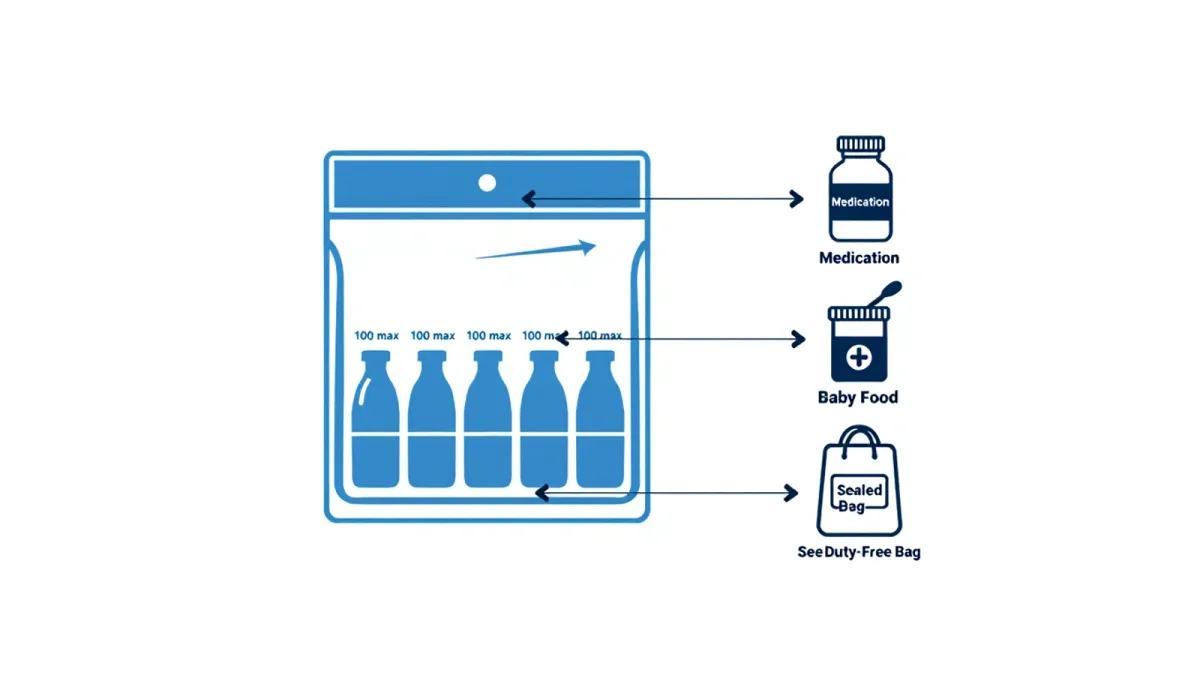
A travel makeup kit is built around one rule: anything liquid, cream, gel, or paste must be 3.4 ounces, 100 milliliters, or smaller and fit in a single quart-sized bag to clear airport security in a carry-on, per the Transportation Security Administration. Solid formats, pressed powders, stick foundations, and pencil products travel without that limit. Everything else in the kit is editing, not regulation.
What Does the TSA Liquids Rule Cover in a Makeup Bag?
The rule is broader than most travelers assume, because it covers texture, not purpose. The TSA's liquids, aerosols, and gels rule states that passengers may bring a quart-sized bag of liquids, aerosols, gels, creams, and pastes through the checkpoint, limited to travel-sized containers of 3.4 ounces or 100 milliliters per item, with anything larger packed in checked baggage. In makeup terms that catches liquid foundation, concealer, mascara, liquid lipstick, cream blush, gel liner, setting spray, primer, and most micellar cleansers.
The TSA's frequently asked questions page adds the cap: each passenger is limited to one quart-size bag of liquids, gels, and aerosols, and it names common items that must comply, including lotion and shampoo. One bag, not one bag per person per purse. Full-size products that matter more than the carry-on can simply ride in a checked bag, where the container limit does not apply.
Which Makeup Formats Travel Best in a Carry-On?
Solid formats are the loophole the rule itself provides, and a full kit can be built from them.
| Product | Carry-on status | Why |
|---|---|---|
| Pressed powder, powder blush, eyeshadow | No liquid limit | Solid formats are outside the rule |
| Stick foundation, cream blush stick, lipstick balm | No liquid limit | Solid or semi-solid sticks are outside the rule |
| Pencil liner and brow pencil | No liquid limit | Solid pencils, no sharps issue when cased |
| Mascara, liquid foundation, liquid lipstick | 3.4 oz or less, in the quart bag | Classed as liquids, gels, and pastes by the TSA |
| Setting spray, primer, makeup remover | 3.4 oz or less, in the quart bag | Liquid or spray formats fall under the rule |
The practical kit design follows directly: multipurpose sticks and powders fill the core of the bag, and the quart bag is reserved for the few liquids that genuinely have no solid substitute, usually mascara, a liquid foundation shade match, and a small cleanser. The TSA's searchable item list lets travelers check a specific product, such as an airbrush makeup machine, before flying, since battery-operated tools carry their own special instructions.
How Do You Pack Makeup so It Survives the Trip?
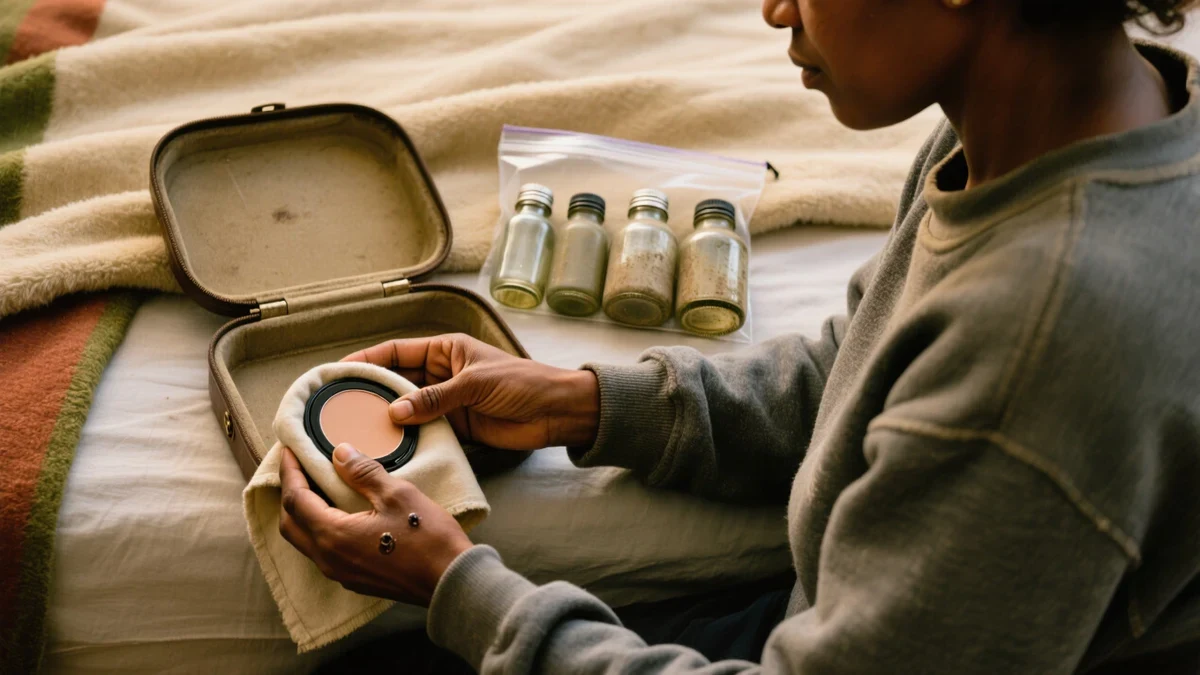
Security rules are the only legal constraint, but physics does the damage. Pressed powders crack under pressure and impact, so cushioning them inside a sock or wrapping them in a soft cloth inside the case is standard practice among frequent travelers. Cabin air is dry, and pressurized cycles are unkind to cream formulas, which can dry out or separate when a jar lid is loose.
A numbered packing sequence keeps it simple:
- Start with a small, structured case with a zip closure, sized to the trip rather than to the collection.
- Choose solid-format duplicates of the essentials, powder or stick versions of base, blush, and lip color.
- Decant only true liquids into 100-milliliter or smaller containers with secure lids, and bag them in the quart bag last so it is easy to pull at screening.
- Wrap pressed powders, cap everything tightly, and pack brushes separately with bristles protected.
- Add SPF in whatever format suits the destination, since sun protection remains a daily step in any climate.
The security rule also quietly enforces honesty about how much product a trip actually consumes. A ten-day holiday does not empty a full-size foundation, and the quart bag's finite real estate is a forcing function: travelers must rank which liquids genuinely earn their three ounces. Mascara and a shade-matched foundation usually make the cut; a fourth neutral palette and a second highlighter rarely do. The result is a kit that fits both the bin at screening and the evening's actual routine.
What Belongs in a Minimal Travel Makeup Kit?
The most resilient travel kit is small enough to fit in a seat pocket and complete enough for dinner. A defensible core, assembled entirely from formats that clear security without a second thought, runs about six items: a stick or powder foundation matched to the destination's expected light and any tan shift; a two-in-one cream stick for blush and lip; a neutral powder eyeshadow single or quad; a pencil liner that doubles for brows and lash line; a mascara, the one near-unavoidable liquid; and a small balm or cream for cuticles, lips, and dry patches on the flight.
Tools deserve the same restraint. One multipurpose brush, a compact powder puff, and a small spoolie cover more looks than a full brush roll, and they pack without bristle damage. A packet of cotton swabs handles smudges and eyeliner cleanup better than a corrector liquid would, at zero liquid cost. Travelers loyal to a specific complexion shade should carry that one item from home rather than gambling on a destination shade match, since foundation mismatch is the most common travel-makeup failure and the hardest to fix mid-trip.
The final edit is destination-driven. A kit built for a beach wedding needs sunscreen compatibility and waterproof mascara logic; a cold-city trip rewards creamier textures that powder-heavy kits lack. The unchanging part is only the bag's architecture: solids in the case, the few true liquids sealed in the quart bag, and nothing glass rattling loose.
Most brand lines now offer a solid or stick counterpart to a hero liquid, and travel sizes of cleanser and moisturizer slot into the same quart bag as the makeup.What Changes for International Travel?
The 100-milliliter container and one-bag structure is broadly shared internationally, so a kit built to the TSA's rule clears most European and Asian checkpoints too. The differences sit at the edges: some airports weigh carry-ons, some limit the number of bags rather than their contents, and aerosols can face stricter caps in specific countries. Checking the destination airport's rules before a long-haul trip avoids surprises.
Skincare-minded travelers should also plan for the destination, not just the flight. A kit calibrated for a humid summer city needs a lighter hand than the same kit carried to a dry, cold one, and long flights favor a simple routine of moisturizer and lip balm over a full face that has to survive hours of recirculated air. The rule of thumb is to fly boring and arrive with options: solids in the case, minimal liquids in the bag, and everything else waiting at home.
This article is for informational purposes only and is not medical advice. For questions about your skin, hair, or scalp, consult a dermatologist or qualified healthcare professional.