Of the three Typsy Beauty products tested in a recent Hindustan Times review, the reviewer gives the clearest endorsement to one: the Glacier Glow Plumping Lip Tint in Guava Sorbet, a glossy pink tint she has repurchased twice, according to Hindustan Times. The liquid highlighter surprised her on oily skin, and the contour wand scored well on shade but poorly on ease of blending.
That split verdict is the most useful thing in the piece. It is a single writer's experience, published by a shop-now desk that discloses affiliate commissions on its links. Read as one person's honest impressions, it says something real about finish, shade and application effort. Read as independent testing evidence, it says nothing of the kind, and the review itself never claims otherwise.
This matters because first-person beauty reviews are the format readers encounter most, and they arrive wrapped in commerce. Learning to separate what a review can establish from what it cannot is a skill, and it applies to any shopping write-up, whether the subject is a makeup wand or a serum.
What did the review actually test, and what did it find?
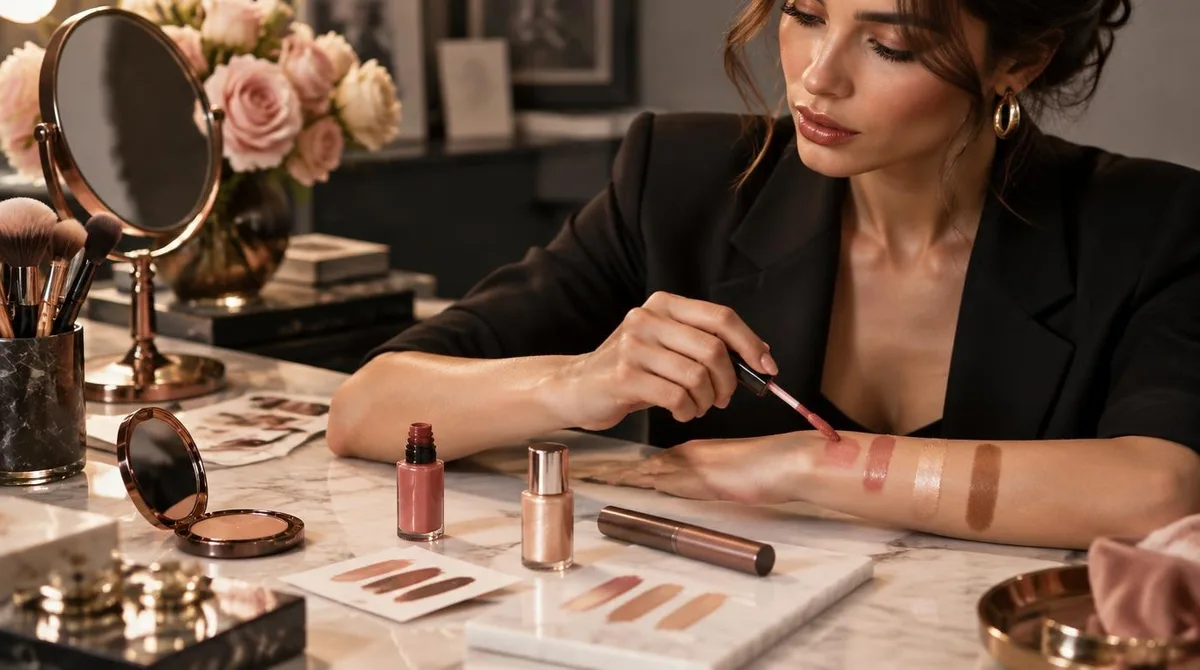
The reviewer, Samarpita Yashaswini, a content producer for HT Shop Now, tried three products: the Glacier Glow Plumping Lip Tint, the Silk Cushion Liquid Highlighter Wand and the Silk Cushion Liquid Bronzer Contour Wand, per Hindustan Times. The article names specific shades for all three: Guava Sorbet for the tint, Diamond Fizz for the highlighter, Maple Syrup for the contour.
The findings, in her own account, break down cleanly. The lip tint is the runaway favourite, now on its third bottle. The highlighter, in a champagne tone, blends into a subtle glow rather than a visible stripe of shimmer. The contour wand has a medium-brown shade that suited her complexion, but blending took work, and applying it directly to the face left darker brown marks she had to fix.
Two disclosed caveats sit over all of it. The desk states that some links may earn a commission, and the reviewer writes from personal use, not from a controlled comparison. Neither point invalidates her impressions. Both points define their limits.
Why is the repurchase detail the strongest signal in the piece?
Repurchase is the one claim in the review that costs the writer something. A first impression can be generous; a third bottle of the same lip tint is a revealed preference, and it is the detail that survives scepticism best, per Hindustan Times.
It is still one person's wallet, on one shade, in one climate and on one lip. The reviewer also reports a tingling sensation on application from the plumping formula, which she personally does not mind. Readers with sensitive lips may weigh that same fact differently than she does. The honest reading is that the tint earned a repeat customer, and that the tingling is a real, disclosed trade-off rather than a hidden flaw.
For readers researching lip formulas generally, the distinction between a tint, a balm and an oil matters more than any single shade verdict, which is why the category breakdown in Lip Balms, Lipsticks, and Lip Oils: What Each Does pairs well with this kind of review.
What does the highlighter result say about oily skin and liquid formulas?
The reviewer began sceptical. She has an oily T-zone and expected a liquid highlighter to push her face from glowing to shiny. Her verdict after use is that the Diamond Fizz shade blended to a natural, skin-like luminosity instead of a metallic finish, and that the lightweight, buildable texture let her control how much shine she added, per Hindustan Times.
The useful takeaway is not that this wand suits oily skin. One face cannot establish that. The takeaway is the method: she evaluated finish after blending, on her own skin type, and named the specific risk she was checking for. That is how a reader should test any liquid luminizer claim, including claims made in advertising. A glow that reads as coming from the skin, as she describes it, is a finish question, and finish questions are answered on application, not on the box.
For a broader framework on matching formulas to skin type, the dermatology-grounded guide to choosing foundation by skin type applies the same logic to base products.
Why did the contour wand underperform on application?
The Maple Syrup shade was a win. The application was not. The reviewer reports that blending took longer than she expected, and that applying the product directly to her face left darker brown marks that needed correcting, per Hindustan Times.
That is a pattern worth naming, because it recurs across liquid contour products in general: pigment concentration that reads as sculpted when diffused reads as a stripe when placed and left alone. Her fix, working the product until it blends properly, is a technique problem, not necessarily a formulation failure, and the review does not claim it is one. Readers who struggle with the same issue may get more from placement and blending guidance, such as the dermatologist-and-research review in Makeup Brushes and Technique, than from swapping products entirely.
How should readers weigh an affiliate-disclosed review like this one?
The disclosure is the starting point, not the disqualification. The Hindustan Times desk states plainly that some links may earn a commission and that this does not influence its opinions, per Hindustan Times. A reader's job is to adjust weight, not to discard. A few checks do most of the work:
- Does the review include a negative finding? This one does, on the contour wand's blending, which is a good sign.
- Are the specifics checkable? Named shades, named applicator details and a stated skin type all are.
- Is the praise tied to use, or to packaging and brand story? This review stays mostly on use.
- Would the praise survive on a different skin tone or type? The review cannot answer that, and does not pretend to.
The last question is where most single-reviewer pieces stop short, and it is the one readers should carry to the next source. Shade-matching judgments in particular depend on the face they were made on, which is why undertone research, covered in How to Find Your Foundation Shade and Undertone, generalizes better than any one reviewer's verdict. For related coverage, see How to Find Your Foundation Shade and Undertone, According to Research.
What this split verdict leaves unresolved
The evidence here establishes three narrow things: one reviewer repurchased a pink glossy lip tint twice and reports mild tingling; one champagne liquid highlighter read as natural on her oily skin after blending; one medium-brown contour shade suited her but demanded blending effort. It establishes nothing about wear time, ingredient composition, performance on deeper or fairer skin tones, or how these products compare with alternatives, because the review does not test any of that.
The likely next step for a reader is unglamorous: treat the lip tint recommendation as the strongest-supported claim in the piece, treat the other two as shade-and-finish leads to verify on their own skin, and wait for wider coverage before drawing formulation conclusions. A first-person review, read carefully, is a useful map of one person's shelf. It is not a lab report, and the desk that published it never said it was.