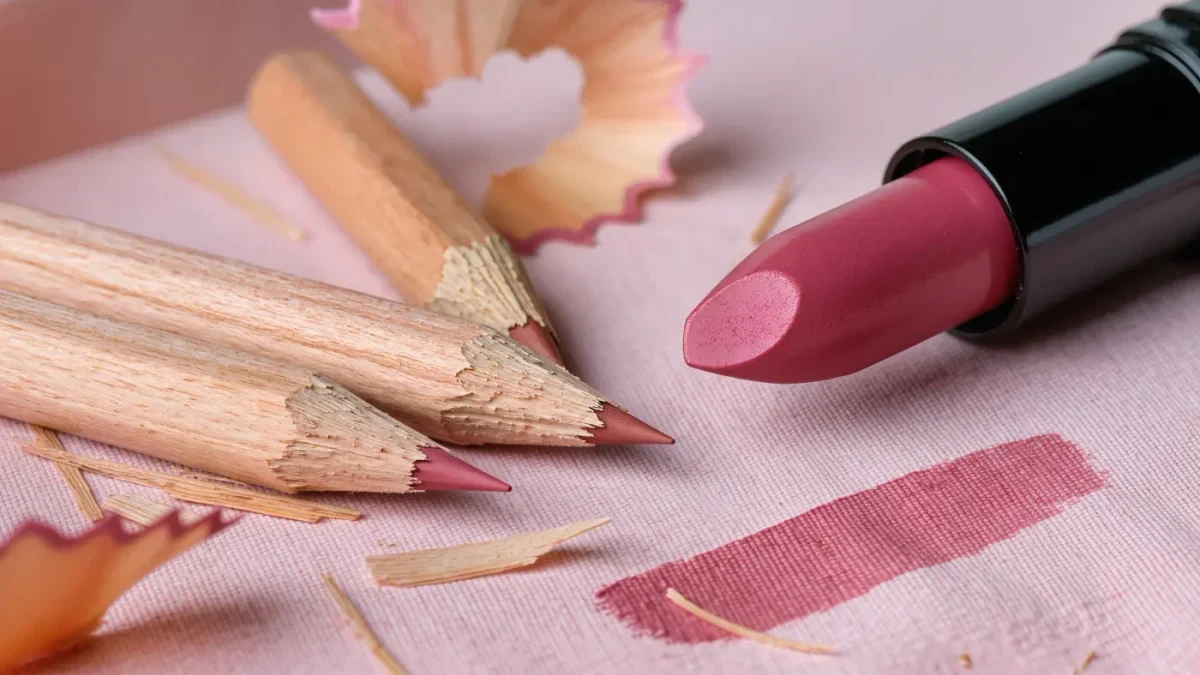
Lip balms, lipsticks, and lip oils differ mainly in wax-and-oil balance: balms slow water loss, lipsticks add pigment in a wax-rich base, lip oils trade longevity for shine. A 2024 study in the International Journal of Dental Hygiene found a panthenol-and-bisabolol lip care safe and effective for mild-to-moderate cheilitis.
What Are Lip Products Actually Made Of?
Every lip formula manages the same physics: lips have no sebaceous glands, so water evaporates quickly and the surface dries, cracks, and peels. Balms respond with occlusives — petrolatum, lanolin, waxes, and butters — that form a barrier. Lipsticks keep those building blocks but add higher wax content for structure and pigments for color, which is why a matte lipstick can feel drier than a balm. Lip oils minimize wax in favor of liquid emollients, prioritizing glide and gloss over a sealed barrier.
The clinical study above gives the category its best recent evidence: 20 patients with mild-to-moderate cheilitis used the panthenol-and-bisabolol lip care for eight weeks, with physician and patient assessments supporting its safety and effectiveness. Panthenol is a humectant-related conditioning ingredient; bisabolol is an anti-irritant constituent of chamomile. The study was open-label and single-centre, so its findings are promising rather than definitive.
Per the American Academy of Dermatology's dermatologist guidance, the texture principle is plain: a thick ointment such as white petroleum jelly "seals in water longer than waxes or oils." That single sentence ranks the entire category — ointments, then waxes, then oils, by occlusive performance.
Why Do Some Lip Balms Make Lips Feel Worse?
Because irritation is often mistaken for efficacy. AAD guidance is direct that many people mistake burning, stinging, or tingling as a sign that active ingredients are working — "That's not what's happening. You're actually irritating your lips," and any product that irritates should be stopped. Common culprits in the literature on cheilitis include fragrance, flavoring agents, and certain preservatives and sunscreen filters in lip formulas.
Winter compounds the problem. AAD board-certified dermatologist Elizabeth Kiracofe, MD, FAAD notes in the AAD's cold-weather guidance that a drop in temperature and humidity makes skin struggle to retain moisture, "leading to itchy, dry skin and cracked lips" — and recommends protecting the lips by wearing lip balm outdoors. SPF matters here year-round: the AAD advises a non-irritating lip balm with SPF 30 or higher before going outdoors, since sun can burn dry, chapped lips more easily and trigger cold sores.
Which Lip Product Should You Use for Which Need?
Choosing by need beats choosing by category loyalty. The table ranks the mainstream formats by occlusive strength and best-fit use, based on dermatological guidance rather than brand claims.
| Format | Barrier strength | Best fit |
|---|---|---|
| Thick ointment (petrolatum-based) | Highest — seals water longest, per AAD | Cracked, very dry lips; overnight repair |
| Balmy wax-and-butter balm | High | Daily maintenance, cold weather |
| Lipstick (wax-rich, pigmented) | Moderate; matte dries faster | Color days; layer balm underneath |
| Lip oil | Lighter — glide over seal | Mild dryness, comfort, shine |
| Tinted balm with SPF 30+ | Moderate with UV filter | Outdoors, all seasons |
How Do You Build a Sensible Lip Routine?
A lip routine is short by nature, and the dermatologist-backed version is mostly about repetition and avoidance rather than accumulation of product.
- Stop any product that stings, tingles, or burns on application — dermatologists identify that feeling as irritation, not action.
- Apply a non-irritating balm several times a day and before bed, per AAD guidance.
- For cracked lips, step up to a thick ointment such as white petroleum jelly, which seals water longer than waxes or oils.
- Use SPF 30+ lip protection outdoors, even in winter.
- If dryness, cracking, or corner-of-mouth soreness persists beyond a few weeks, see a dermatologist — persistent cheilitis has many causes a balm cannot address.
What the evidence does not show is that any lip product "plumps" or medically repairs lips; cosmetic claims stop at appearance and feel. The best-supported ingredients are unglamorous — petrolatum, waxes, and, per the 2024 study, panthenol and bisabolol for chapped-lip care.
What About Lip Scrubs, Plumpers, and Overnight Masks?
The adjacent lip category runs on stronger marketing than evidence. Lip scrubs are physical exfoliants, and dermatological guidance on irritated, cracked lips leans toward stopping irritation rather than adding abrasion — a compromised lip barrier generally wants occlusion first, polish later, if at all. Nothing in the clinical literature supports scrubbing chapped lips as a repair strategy.
Plumpers work by irritation, which is the exact mechanism dermatologists tell readers not to mistake for efficacy. Tingling from cinnamon-, mint-, or pepper-derived ingredients reflects stimulation and transient swelling, not conditioning; per AAD guidance, a product that stings or burns the lips is one to stop using. Readers who enjoy the effect can make an informed choice, but the label "plumping" is describing a sensory event, not a treatment.
Overnight lip masks are, functionally, occlusive balms in a jar with a higher price and a cuter name. The same petrolatum-and-wax physics applies, and the 2024 panthenol-and-bisabolol study supports conditioning ingredients rather than any special overnight chemistry. What an overnight format genuinely adds is time — a barrier left undisturbed for eight hours has more opportunity to reduce water loss, which is an argument for ointments at night regardless of branding.
The category dictionary, then, is shorter than the shelf suggests: pick occlusion strength to match the need, avoid anything that stings, keep SPF in the rotation, and spend extra only when texture or pigment genuinely earns it. Lips repay consistency far more reliably than they repay novelty — a conclusion the shelf fights with new formats every season, and the physics politely ignores.
A last word on color products and lip health, since the categories meet at the lipstick counter. Pigmented lip products are not a barrier problem, but long-wear formulas lean on film-formers and higher wax loads that can feel drying over a full day; layering a balm underneath is a reasonable, texture-level fix. Dermatological guidance on irritated lips applies regardless of pigment: any lipstick that stings on application goes back in the drawer until the lip barrier recovers.
Angular cracks at the corners of the mouth deserve their own caution, because they are not simple chapping — persistent cracking has distinct causes, including fitting issues and deficiencies, and a balm that cannot resolve it is not failing so much as working outside its job description. That is the moment for a dermatology visit, not a stronger balm — and a consultation is faster than a drawer full of failed ones.
This article is for informational purposes only and is not medical advice. Cosmetics are not treatments for medical conditions. For persistent skin, hair, or scalp concerns, consult a dermatologist or qualified healthcare professional.