Choosing base makeup by skin type means ignoring most of the front label: a systematic review by Johns Hopkins dermatologists in the Journal of Dermatological Treatment found that non-comedogenic, hypoallergenic, oil-free, and fragrance-free are marketing terms not regulated by any governing body. What the formula contains, and how it interacts with the skin's own oil, matters more than any badge.
Why do labels like non-comedogenic mean so little?
The Hopkins review, by Elena Boozalis and Shawn Patel, searched the published literature on dermatologic marketing terms and concluded that they provide varied clinical utility with no regulatory definition. A non-comedogenic claim, in other words, is the brand's own assertion rather than a certified fact, and the same holds for clean, natural, and dermatologist-tested style language. The review adds that products labeled natural are not necessarily safer or less irritating for people with atopy or a history of allergic contact dermatitis.
That does not make the labels useless, but it changes how to read them. Fragrance-free, for instance, does map onto a real ingredient difference, the absence of fragrance compounds that are leading cosmetic allergens, even though the term itself is unregulated. Non-comedogenic tells a shopper only that the brand believes the formula is unlikely to clog pores, which is a starting hypothesis to test on one's own skin rather than a guarantee.
The review also settles a few adjacent shelf arguments along the way. Despite the popularity of paraben-free labeling, the Hopkins authors conclude that parabens are safe for patients in the quantities used in cosmetic products, apart from those with a true contact allergy to the preservative. And they note that a working knowledge of ingredients serves patients better than label-hunting, because it is the ingredient list, not the badge row, that predicts tolerance.
For acne-prone readers specifically, the authors' finding reframes the whole category. Since no badge certifies pore safety, the useful questions become formula-family questions, how much oil the base carries and how long it sits on skin, which is exactly where the sebum literature picks up.
How does skin type actually change base makeup needs?
The dermatology of it runs through sebum, the skin's own oil. A review in the Journal of Dermatological Treatment by dermatologist Joseph Del Rosso and Leon Kircik describes how sebum production interacts with inflammation and follicular changes in acne, and notes that regional differences in facial oil, plus a person's sex and age, help explain where breakouts form. Oily skin changes how a foundation wears over a day; dry skin changes how it sits in the first hour.
Translated to the makeup counter, those differences point to formulation rather than to price tier:
| Skin type | Formulation that suits it | Why, per the dermatology literature |
|---|---|---|
| Oily, acne-prone | Low-oil or powder bases, mineral options | Sebum already contributes to comedogenic cascades; heavier oils add fuel, per the Del Rosso review |
| Dry | Hydrating liquid or cream bases | Barrier support matters; powder can emphasize flaking |
| Sensitive, eczema-prone | Fragrance-free, short ingredient lists | Fragrance is a leading cosmetic allergen; natural does not mean gentler, per the Hopkins review |
| Combination | Apply different formulas by zone | Regional sebum differences across the face are documented in the same review |
| Mature | Satin cream bases | Heavily matte formulas settle into fine lines; hydration improves wear |
The table is a starting map, not a prescription, and patch-testing a new base along the jaw for a few days costs nothing.
What about coverage choice and undertone?
Coverage is a formulation decision with skin consequences. Full-coverage bases sit longer and layer more pigment and film-formers over the skin, which matters most for acne-prone or sensitive skin; sheer and medium formulas give less camouflage but less occlusion. Removing any of them thoroughly at night, with a cleanser matched to the same skin type logic, closes the loop, since residue extends exposure to preservatives and pigments.
Finish interacts with skin type as much as coverage does. A heavily matte finish relies on powders and absorbents that soak up oil through the day, which oily skin tolerates and dry skin experiences as tightness; a satin or dewy finish leans on humectants and light emollients, which dry skin drinks in and oily skin may find slides by mid-afternoon. Neither finish is more advanced, they are simply different formulation tools, and the dermatology of sebum explains why the same product earns opposite reviews from different faces.
Primer follows the same logic one layer down. Silicone-based primers smooth texture and add an occlusive layer some acne-prone skin does not need daily, while hydrating primers duplicate function with a moisturizer. Readers building a minimal routine can skip primer entirely; the base formula itself is the decision with the most evidence behind its effects on wear and tolerance.
Tool choice is the last variable, and it is smaller than the market for brushes suggests. A damp sponge sheers out coverage and absorbs product, which suits skin that wants less on it; a brush builds coverage faster and can press base into texture. Neither is more hygienic by nature, since both need regular washing, and an unwashed applicator is a more common breakout variable than any foundation formula.
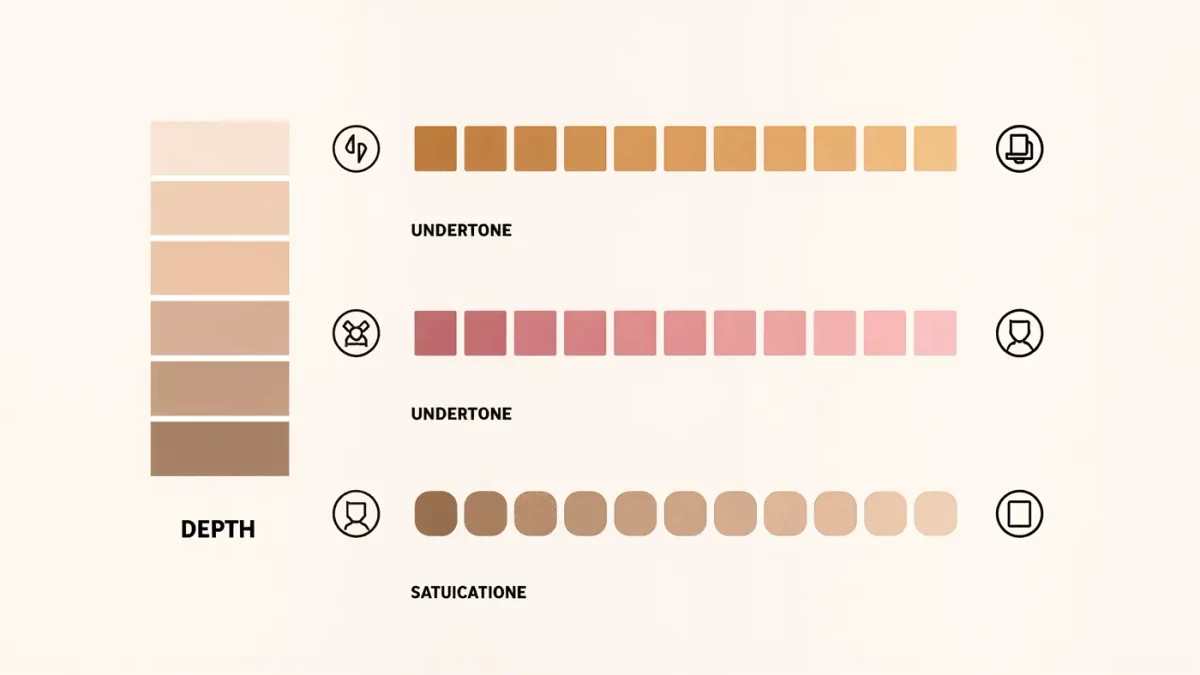
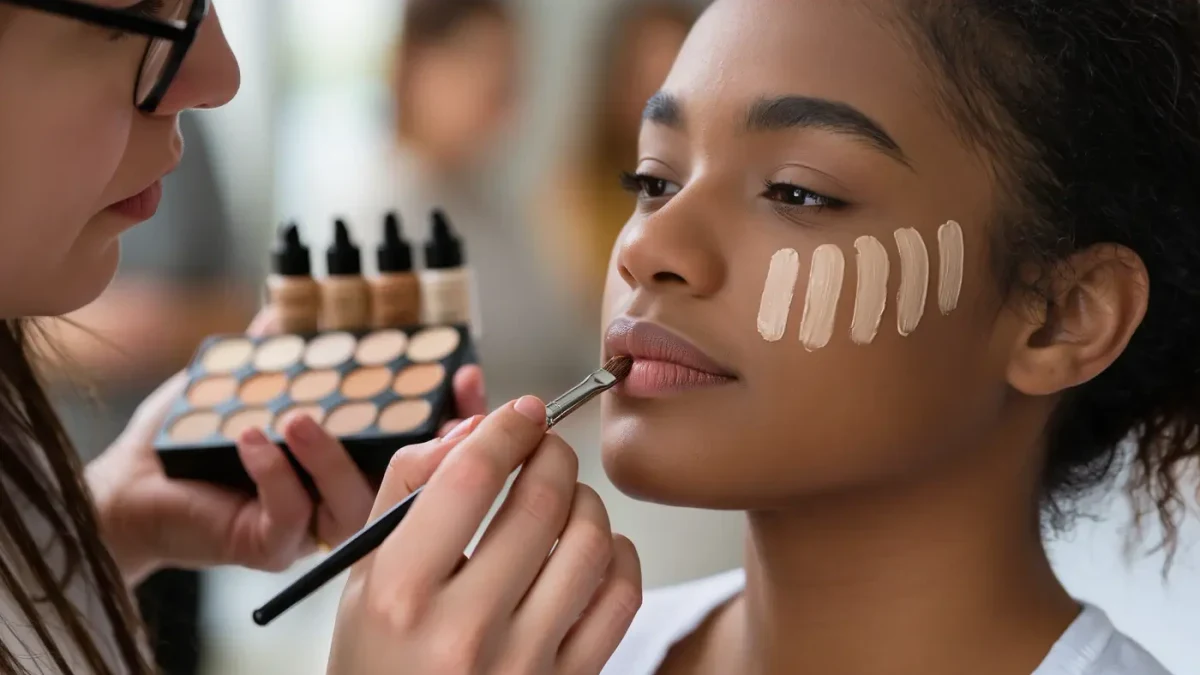
Shade matching deserves the rigor the beauty counter rarely gives it: testing on the jawline in daylight, checking the undertone against the neck, and buying for the season actually being lived in. A base that matches poorly gets worn less, and no formulation benefit survives being the wrong shade.
Seasonality is the detail most routines skip. Skin color shifts between winter and summer even under diligent sunscreen use, and the foundation bought during a July tan is the wrong shade by February. A pragmatic habit from makeup artists, keeping one shade for each half of the year and mixing adjacent shades in between, costs less than replacing a bottle annually and wastes none of it.
How should a shopper actually choose?
Collapsed into a process, the dermatology-first approach looks like this:
- Read the ingredient list before the front label, since the badge terms are unregulated marketing.
- Match the formula family to skin type using the table above as a starting point.
- Patch-test along the jaw for a few days before committing the whole face.
- Remove the base fully every night with a gentle, skin-type-matched cleanser.
- Take persistent breakouts or irritation to a dermatologist instead of churning through brands.
The quiet truth of base makeup is that skin type determines wear more than any product's promises do, and that the unregulated vocabulary on packaging is designed to sound like dermatology without carrying its weight. Readers who read ingredient lists already have the right reflex; this is simply where it pays off most.
This article is for informational purposes only and is not medical advice. It does not diagnose or treat any skin or hair condition. For persistent redness, breakouts, hair loss, or scalp symptoms, consult a dermatologist or qualified healthcare professional.