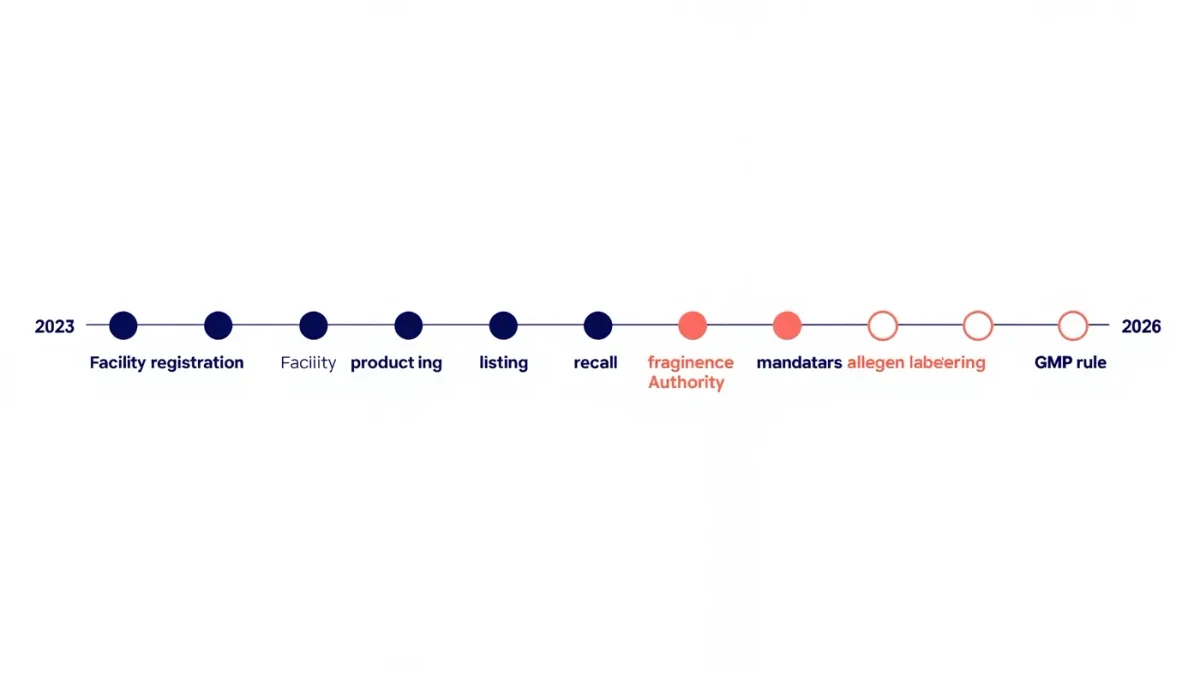
The first biennial renewal of cosmetic facility registrations under the Modernization of Cosmetics Regulation Act of 2022 was due July 1, 2026, per legal analysis by Wiley Rein on JD Supra. Facilities that registered by the original July 1, 2024 deadline had to renew within two years: the first test of the biggest oversight expansion since 1938.
What does MoCRA actually require?
The FDA's own summary of the law lays out the framework. Manufacturers and processors must register facilities with the FDA and renew every two years, and a responsible person must list each marketed cosmetic product with its ingredients and update the listing annually. The agency also gained mandatory recall authority, and serious adverse events must now be reported to the FDA, per the FDA's MoCRA overview. The same page notes the FDA can suspend a facility's registration if it determines a product made there has a reasonable probability of causing serious adverse health consequences or death.
To handle the renewal wave, the FDA announced updates to its Cosmetics Direct electronic submission portal on February 11, 2026, adding registration status and renewal date fields to facility homepages, per the agency's registration and listing page. Automated email reminders go to facility contacts before each renewal date.
Why should a shopper care about paperwork?
Registration is the plumbing behind shelf-level accountability. If a facility misses renewal, its products cannot lawfully be introduced into United States commerce while the lapse persists, which is a supply and compliance issue for the brands on a store shelf, not a safety verdict on any named product. The more consumer-facing changes arrive through the same law: standardized ingredient listing obligations, fragrance allergen labeling rules under development, and serious adverse event reporting that gives the FDA visibility it never had under the pre-2022 regime.
What is still in progress?
The July 2026 date closes the first renewal cycle but not the whole agenda. Good manufacturing practice regulations for cosmetic facilities were still being finalized, and testing-method rules for talc-containing products were directed separately, per the FDA's overview. Readers can reasonably expect labeling and GMP news to keep arriving in phases. The Wiley Rein analysis on JD Supra frames the practical takeaway for industry: coordinate registrants and responsible persons early, because renewal failures create avoidable compliance exposure. For consumers, the milestone means the register behind every compliant label got its first scheduled maintenance check.
This article is for general information only and is not medical advice. For persistent skin, hair, or scalp concerns, consult a dermatologist or qualified healthcare professional.