B-beauty is the name industry observers have given a distinctly Brazilian approach to skincare: native Amazonian and Atlantic Forest ingredients, scientific validation, and routines built for a tropical, sun-exposed, multi-ethnic market. According to Yahoo Shopping, Brazil already ranks among the top three consumers of personal-care products worldwide. What is shifting now is the export of that approach, positioned as a counterpart to the global rise of K-beauty.
For shoppers, the rise of B-beauty matters for one practical reason: it puts ingredients that are hard to replicate anywhere else into wider circulation. Copaiba resin, cupuaçu butter, andiroba and buriti carry both traditional use histories and measurable bioactivity, per the same report. Whether they reach shelves with clinical credibility and fair sourcing behind them is the question the next few years will answer.
The movement did not appear from nothing. Domestic giants such as Natura, O Boticário and Granado helped professionalize the category at home, while a newer cohort of independent labels treats Brazilian origin as strategy rather than a marketing accent. Retail experiments like Mata Lab in São Paulo have given many of these brands their first physical footholds, and export platforms such as B-Beauty & Wellness aim to move the category beyond regional strength. Exports of Brazilian hygiene, perfume and cosmetics have climbed in recent years, and cultural soft power, from film to fashion to body-care formulas favored by global celebrities, has amplified the visibility.
Why is B-beauty rising now, and what makes it different?
The difference is what the ingredients are asked to do. K-beauty built its global following on multi-step rituals and texture innovation; B-beauty, as described by Yahoo Shopping, is less about rituals imported from elsewhere and more about native ingredients, fermentation, and routines that reflect how people actually live in a tropical climate. That includes strong sun exposure and a wide range of skin tones, which shapes what counts as a high-performance product in that market.
Readers following the K-beauty comparison can see how the two currents meet at retail in What the Sephora Olive Young K-Beauty Edit Means for Shoppers. The parallel is instructive: K-beauty's rise was carried by distribution deals and curation. B-beauty's path runs through export programs and ingredient science instead, which may make it slower to arrive but harder to copy.
There is also an identity argument. Brazilian brands are treating biodiversity and multi-ethnic formulation as a competitive advantage, not a story bolted onto a product. For shoppers with deeper skin tones, that framing echoes the broader push for pigment-aware research covered in New JAAD Research Puts Hair and Skin of Color Data Front and Center. We covered a connected angle in New JAAD Research Puts Hair and Skin of Color Data Front and Center.
Which ingredients define the category?
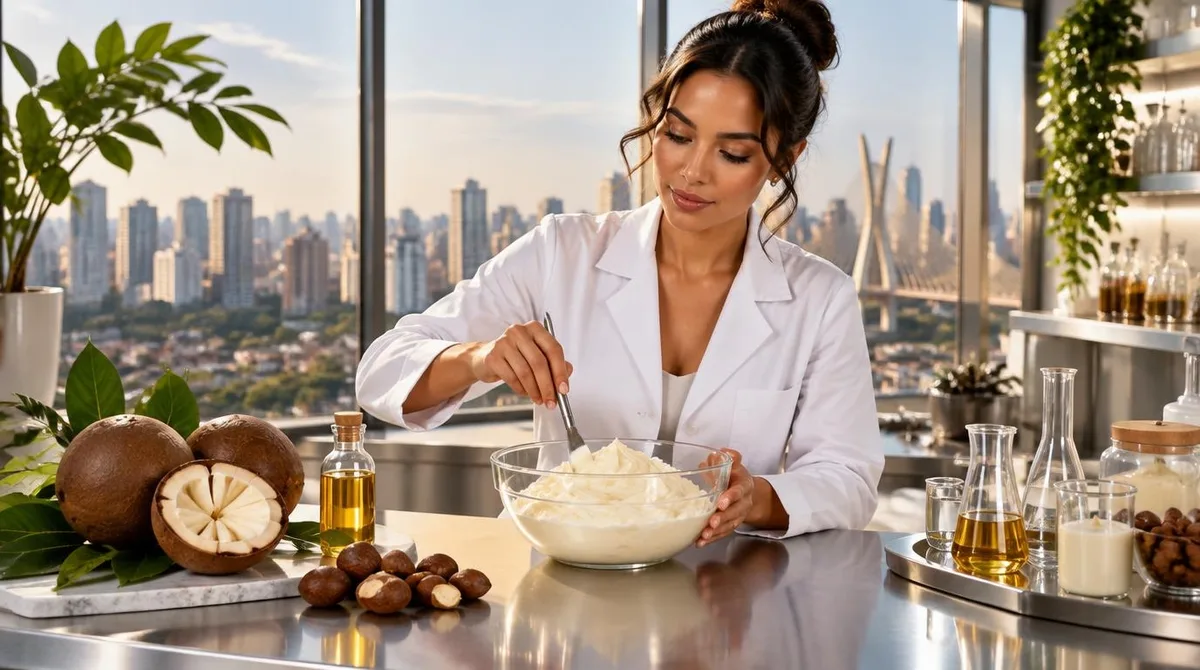
The report names a specific toolkit: copaiba resin, cupuaçu butter, andiroba and buriti, plus fermented whole-plant extracts. Each comes with a traditional use history and, per the report, measurable bioactivity. That combination is the category's real export. A cupuaçu butter or buriti oil is not interesting because it is exotic; it is interesting because it is difficult to source or replicate elsewhere.
The fermentation angle deserves attention. Rather than isolating a single active, whole-plant fermentation preserves synergistic compounds, an approach that differs from the single-molecule actives that dominate Western ingredient marketing. Shoppers who read ingredient lists will recognize the pattern: shorter, more botanical lists, with the plant named rather than a lab-derived derivative.
How are brands actually doing it?
Three examples in the report sketch different models, and they are worth comparing side by side.
| Brand | Model | Brazilian link |
|---|---|---|
| Halo 42 | Founder story carrying one ingredient into wellness territory | Copaiba resin sustainably sourced from the Amazon |
| Symbiome | Microbiome science with a Brazilian biotech partner | Precision-fermented oils from whole Amazonian plants, fermented in Brazil |
| Sangre de Fruta | Botanical, sensorial luxury made in Canada | Rides the same rainforest-ingredient interest without Brazilian production |
Halo 42 was co-founded by Tim Quinn, a longtime Armani Beauty executive and celebrity makeup artist, and Mark A. Turnipseed, a bestselling author and wellness advocate. The brand centers on copaiba, a resin sustainably sourced from the Amazon, and has appeared in outlets including Oprah Daily while partnering with retailers such as Bloomingdale's. Its framing links Amazonian botany with mental-wellness positioning, which places it closer to the crossover territory covered in wellness than to a classic skincare launch.
Symbiome is the science-led case. Co-founded by physician Larry Weiss, it partners with Brazilian biotech Plantus, under the stewardship of Dr. Zelita Rocha, to produce precision-fermented oils and postbiotics from whole Amazonian plants such as Sanoma (Croton cajucara) and Mufumbo. The work draws on research into ancestral skin microbiomes, including studies involving Yanomami communities, and frames modern skin concerns as a loss of microbial resilience. Fermentation happens in Brazil with the plants' own endogenous microbes, and the partnership includes benefit-sharing and compliance with Brazilian biodiversity rules.
Sangre de Fruta is the instructive edge case. Founded and produced on Bowen Island in British Columbia by Allison Audrey Weldon, it is named after a line in a Pablo Neruda poem and emphasizes small-batch, handcrafted botanical formulas. It participates in the same current of botanical, sensorial luxury that has elevated interest in rainforest-derived ingredients, even though its Canadian production distinguishes it from brands sourcing primarily in Brazil. That distinction is a useful filter for shoppers: proximity to the ingredient story is not the same as sourcing from it.
What should shoppers watch for?
Two things. First, sourcing claims. The report flags sustainability and benefit-sharing requirements such as the Nagoya Protocol as a central challenge for the category. Equitable sourcing is a live issue, not a settled one, and shoppers who want to verify botanical claims can start with how certification works in Beauty Certification Logos, Explained: What COSMOS Certifies and What It Doesn't.
Second, formulation literacy. The category's credibility rests on pairing biodiversity with clinical validation, per the report. That means the interesting B-beauty launches will be the ones that name their sourcing and their science, not the ones that borrow the word "Amazonian" as a mood. Readers can track how new launches break down by formulation in August 2026 Launches, Explained by Their Formulations: Peptides, Starches, Ceramides. Readers following this should also see August 2026 Launches, Explained by Their Formulations: Peptides, Starches, Ceramides.
The evidence so far establishes three things: Brazil's scale as a beauty market, a rising export curve, and a set of ingredients with documented bioactivity and traditional use. What remains unknown is whether the category can build international distribution and brand recognition beyond hair and body care, and whether benefit-sharing holds up as volume grows. Those are the tests to watch, and they will show up on ingredient lists and sourcing pages before they show up in marketing.