Hair tools need a cleaning schedule: a UK study in the Journal of Applied Microbiology found roughly 79 to 90 percent of used cosmetic products contaminated with bacteria, beauty blenders averaging over one million colony-forming units per milliliter. The same hygiene logic covers brushes, combs, and heat tools.
What Did the Tool-Hygiene Study Actually Find?
The study, conducted by researchers at Aston University and published as "Microbiological Study of Used Cosmetic Products," examined donated, in-use products including mascaras, lip glosses, eyeliners, lipsticks, and beauty blenders. Beyond the headline contamination rates, the authors detected Staphylococcus aureus, Escherichia coli, and Citrobacter freundii — bacteria associated with skin, gastrointestinal, and environmental sources — and reported that 93 percent of beauty blenders in the sample had never been cleaned, while 64 percent had been dropped on the floor and continued to be used.
The mechanisms translate directly to hair tools. Anything used damp, stored in a bathroom, or swept over the scalp accumulates microbes the same way sponges do. Hairbrushes add scale and sebum to the residue load, and heat-styling tools bake product buildup onto their plates, which can roughen the tool surface that then drags across the hair cuticle.
What the study does not show is that any specific illness followed from any specific reader's brush. It documents contamination levels and hygiene gaps — a reason for routine cleaning, not a panic.
How Should Hair Tools Be Cleaned?
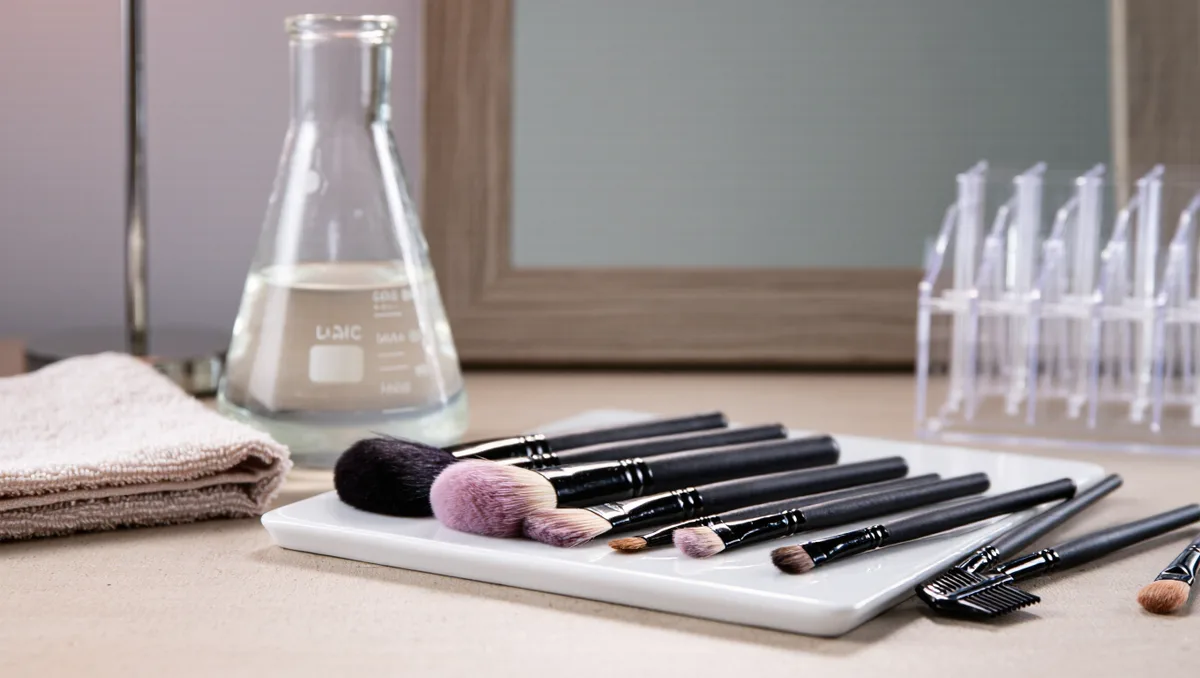
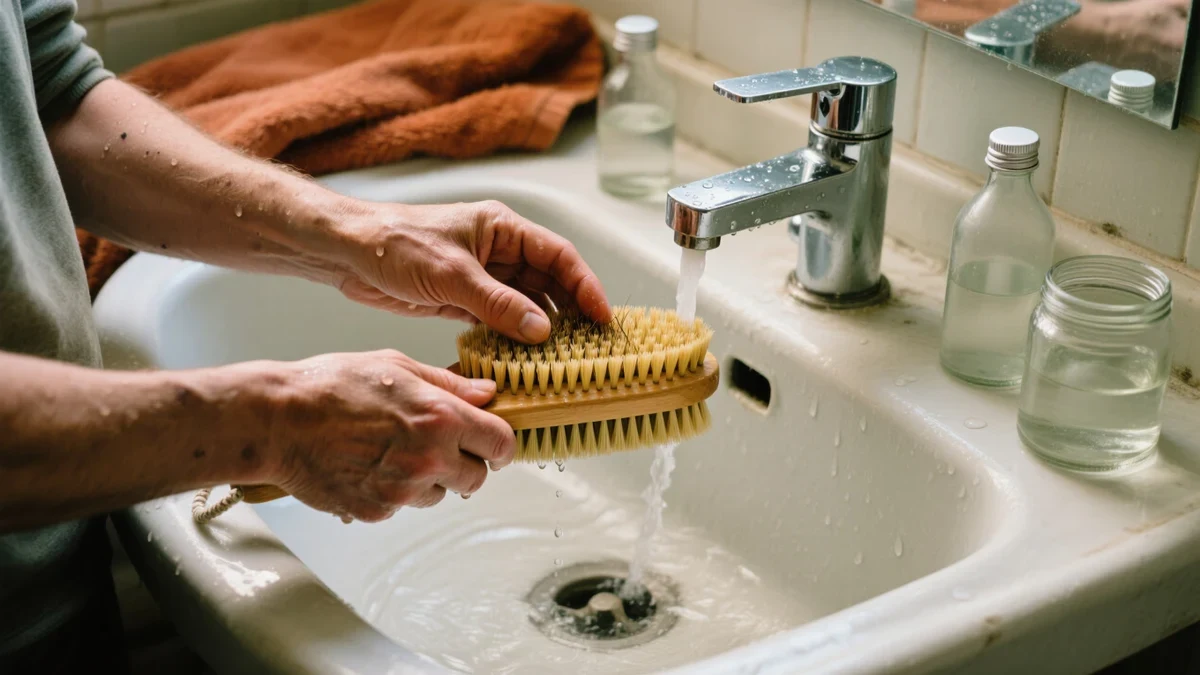
Dermatological and cosmetic-science hygiene guidance converges on simple mechanical cleaning: remove hair and residue, wash with mild soap or shampoo, rinse fully, and dry completely before storage. Damp storage is the recurring villain in the contamination data, because moisture is what lets bacterial loads climb.
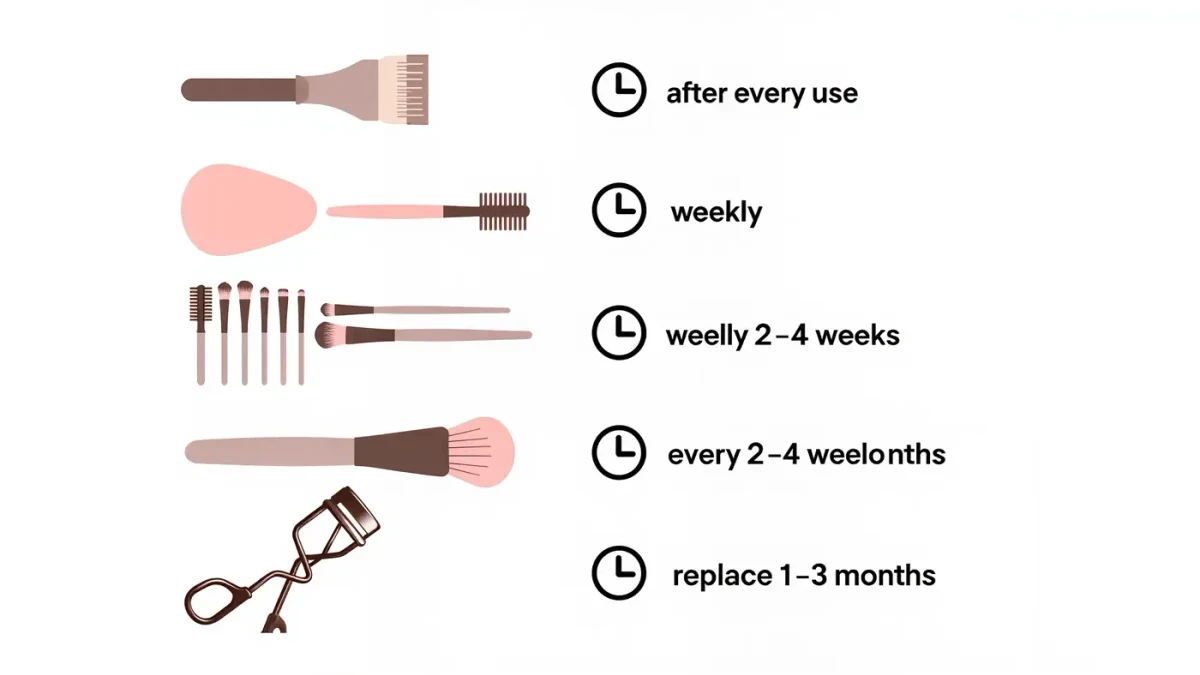
- After every use, pull loose hair from brushes and combs — residue builds fastest when old product meets new.
- Weekly for daily-use brushes and combs: soak in warm water with a drop of gentle shampoo or soap, work through the bristles, rinse thoroughly.
- Monthly, deep-clean paddle brushes by removing the cushion pad if the design allows, and wash the base where sebum collects.
- Dry every tool fully, bristles down or in open air, before putting it away in a drawer or bag.
- Replace tools that stay musty, discolored, or damaged — a cracked brush face or scratched straightener plate cannot be cleaned back to smooth.
How Do Technique and Tool Condition Affect Hair?
Hygiene and technique meet at the cuticle. Hair that is brushed aggressively while wet — when it is most elastic and breakable — or dragged through a dirty, snagging brush shows more mechanical damage. The habit list below reflects standard dermatological and trichological advice for minimizing that damage across hair types, from fine and straight to coily and textured.
| Tool habit | Risk it creates | Better practice |
|---|---|---|
| Brushing soaking-wet hair | Stretch and breakage | Detangle damp hair with a wide-tooth comb and conditioner |
| Heat styling on highest setting | Cuticle damage, especially on fine or colored hair | Lowest effective heat, in sections |
| Storing damp tools closed | Microbial growth per contamination studies | Air-dry fully before storage |
| Never washing brushes | Residue and sebum redeposited on scalp | Weekly wash, monthly deep clean |
| Sharing brushes and combs | Cross-transfer of microbes, per FDA guidance on sharing cosmetics | Keep tools personal |
The FDA's eye cosmetics guidance makes the sharing principle explicit — "Don't share or swap eye cosmetics -- not even with your best friend" — and the logic holds for tools that touch the scalp, especially anyone with an irritated or compromised scalp barrier.
For textured and coily hair, tool hygiene has a technique dimension too: denser brushes and wide-tooth combs distribute scalp oils along the strand during use, so product residue transfers faster. A clean tool is a small, free upgrade to any routine — and, unlike most upgrades, the evidence for it is sitting in a microbiology journal.
How Do You Know a Tool Needs Replacing?
Cleaning has a limit, and some tools cross it. Bristles that stay bent after washing, a paddle cushion that stays damp or smells musty after full drying, a comb with missing teeth, or a straightener plate with visible product baked onto it are all past the cleaning stage. Damaged surfaces drag against the cuticle instead of gliding, which converts a styling tool into a friction source.
Replacement intervals depend on use and care rather than a universal calendar, but the signs above are more reliable than any fixed rule. A daily-use brush that is washed weekly and dried fully will outlive a rarely-washed one by a wide margin, which makes the hygiene routine itself a budget strategy — tools are among the few beauty purchases whose lifespan the owner directly controls.
Sharing deserves one repeated caution. The Aston University data showed contamination in personal-use products kept in ordinary bathrooms, and the FDA's guidance on sharing cosmetics exists because another person's microbiome is a variable no cleaning routine fully controls. Household members sharing a heat-styling tool that touches only dried hair carries less risk than shared brushes, combs, or anything damp, but personal tools remain the evidence-aligned default.
Does Hair Type Change the Hygiene Rules?
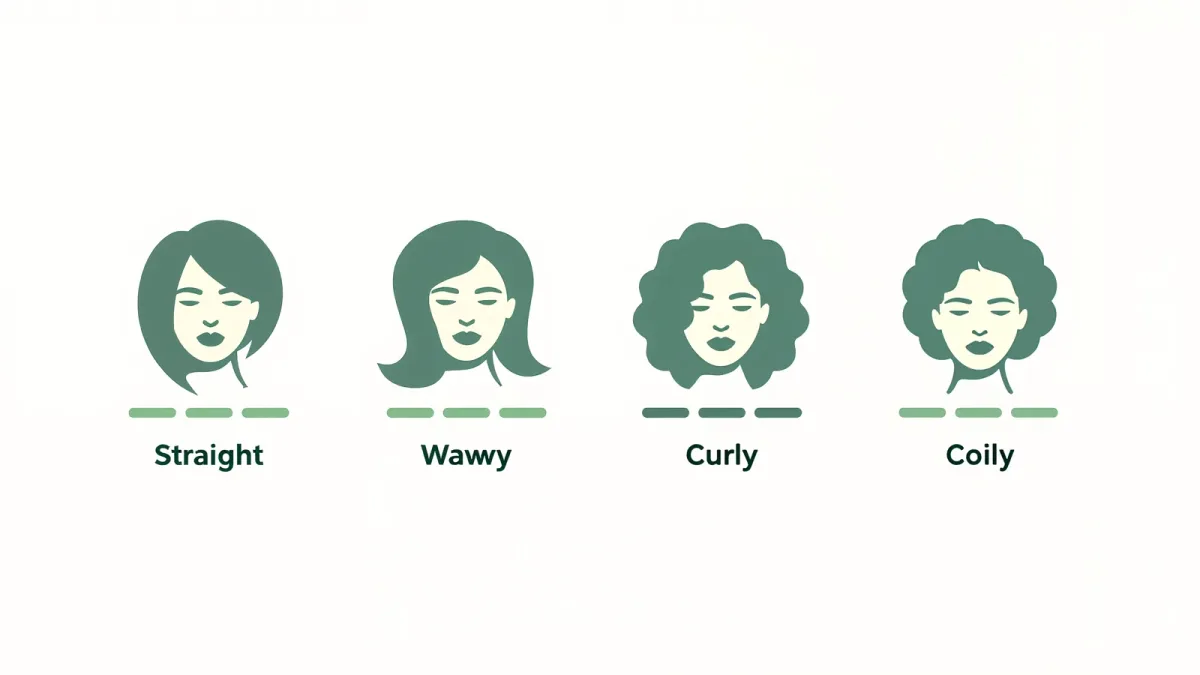
The cleaning physics does not change, but the schedule does. Fine, straight hair shows product residue and scalp oil within a day or two, so daily-use brushes on oily scalps collect sebum fastest and benefit from the weekly wash without fail. Coily and textured hair, usually styled less frequently and with heavier butters and oils, leaves denser residue in combs and Denman-type brushes — a monthly deep clean plus prompt hair removal matters more than frequency alone.
Wigs, extensions, and protective styles add their own tools — satin-lined caps, wide seams, hooded dryers — and the same two rules govern all of them: nothing damp goes into storage, and anything that touches the scalp stays personal. The contamination data showed damp storage as the accelerant; protective styling simply gives moisture more places to hide.
Heat tools follow a residue rule rather than a germ rule: cooled plates should be wiped after each use with a damp cloth, because baked-on product cannot be cleaned off later without abrasive damage to the coating. A ruined plate coating is a hair-damage mechanism, not just cosmetic wear.
None of this requires a special product. Mild shampoo, warm water, air, sunlight through a window, and a calendar reminder do the documented work — the same conclusion the microbiology keeps reaching: it is the drying, not the buying, that changes the bacterial math.
This article is for informational purposes only and is not medical advice. Cosmetics are not treatments for medical conditions. For persistent skin, hair, or scalp concerns, consult a dermatologist or qualified healthcare professional.